
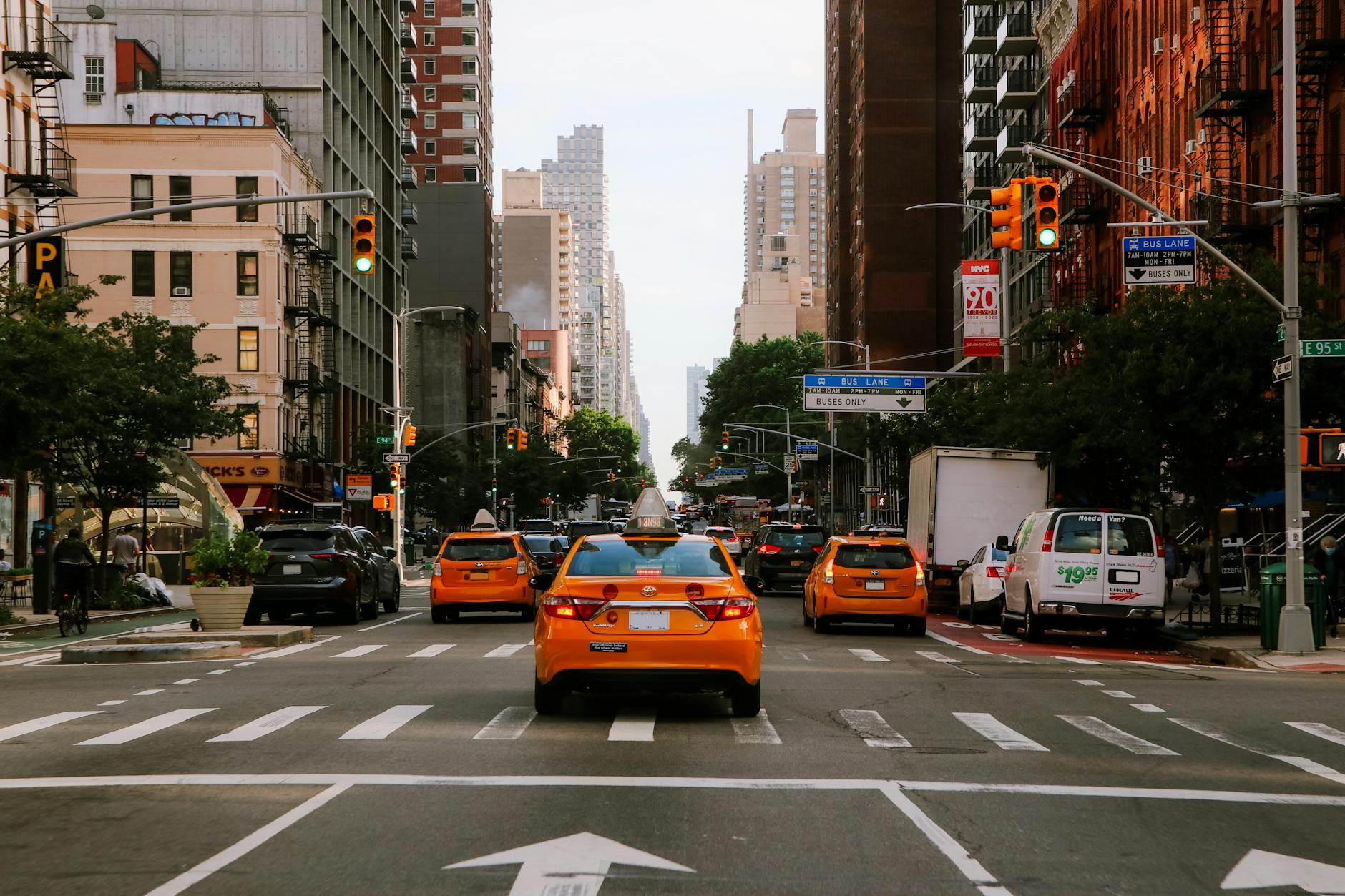
Congestion pricing money is cleaning the air in the Bronx. Not a slogan. An actual milestone, with numbers to back it up.
Governor Kathy Hochul announced Wednesday that the Metropolitan Transportation Authority and the New York City Department of Transportation have replaced 20 diesel-powered transport refrigeration units at the Hunts Point Produce Market with clean diesel or hybrid models, paid for directly by congestion pricing toll revenues. The swap sounds technical. The impact isn’t.
Replacing a single diesel transport refrigeration unit avoids particulate matter emissions equivalent to pulling 330 trucks off the Cross Bronx Expressway every day. Multiply that by 20 units and you get the equivalent of removing 6,600 trucks daily from one of the most polluted corridors in the country. The first batch of replacements will cut annual nitrogen oxide emissions by 66%, particulate matter by 99.7%, hydrocarbons by 96.8%, carbon monoxide by 97.8% and carbon dioxide by 15%. Those aren’t projections. That’s what the new equipment delivers.
South Bronx residents have spent decades breathing some of the worst air in New York City. The Cross Bronx Expressway, carved through the borough in the 1950s by Robert Moses, runs within blocks of residential neighborhoods and schools. Asthma rates in the Bronx consistently rank among the highest in the state. So when Hochul frames this as addressing communities “neglected for far too long,” she isn’t wrong, though it also isn’t the full history.
“Congestion pricing has been a once-in-a-lifetime success story, leading to cleaner air, better transit and faster and safer traffic throughout the city,” Hochul said.
MTA Chair and CEO Janno Lieber kept it short. “Congestion pricing is here and it’s working, less traffic, cleaner air, in the Bronx as well as Midtown Manhattan,” he said. “These new TRUs are just the first of many clean air investments to come paid for by tolling revenues.”
That framing matters. The refrigeration units are a start, not a finish line.
New York State Department of Transportation Commissioner Marie Therese Dominguez pointed to the larger picture around Hunts Point, noting that the $1.7 billion Hunts Point Access Improvement Project had already taken 13,000 trucks off local streets daily by building a direct access route to the market. The new refrigeration units stack on top of that investment. Dominguez said the combined effect has increased housing and economic investment in the area while also improving access to the Bronx River and creating new connections to Starlight Park and Concrete Park.
The Hunts Point Produce Market is worth understanding in context. It’s one of the largest food distribution hubs in the world, handling a significant share of the fresh food supply for New York City and the broader region. The market operates around the clock, and its refrigeration infrastructure runs constantly. Diesel-powered units running all day, every day, in a dense urban borough add up fast. Clean replacements at that scale move the needle in ways that a handful of electric buses or bike lanes simply can’t.
Still, critics of congestion pricing will note that the program’s benefits have flowed unevenly across the five boroughs and that outer-borough residents who drive into Manhattan carry a disproportionate toll burden. The refrigeration unit announcement is, at least in part, an answer to that critique. The MTA and the Hochul administration have faced sustained pressure to show that congestion pricing dollars reach communities beyond Midtown.
Reporting from amNewYork first flagged the details of the announcement Wednesday.
The MTA’s congestion pricing program, which launched in 2024 after years of legal and political delays, charges most passenger vehicles a toll to enter Manhattan south of 60th Street. Revenues fund capital improvements to the transit system, but the legislation authorizing the program also required mitigation investments in communities most affected by traffic pollution. Hunts Point qualifies under any reasonable reading of that standard.
What happens next with those revenues is the real test. Lieber said Wednesday that the TRUs are “just the first of many clean air investments to come.” That’s a promise worth tracking. The Bronx has heard promises before.
Twenty refrigeration units represent real, measurable progress. The borough deserves more of it.