
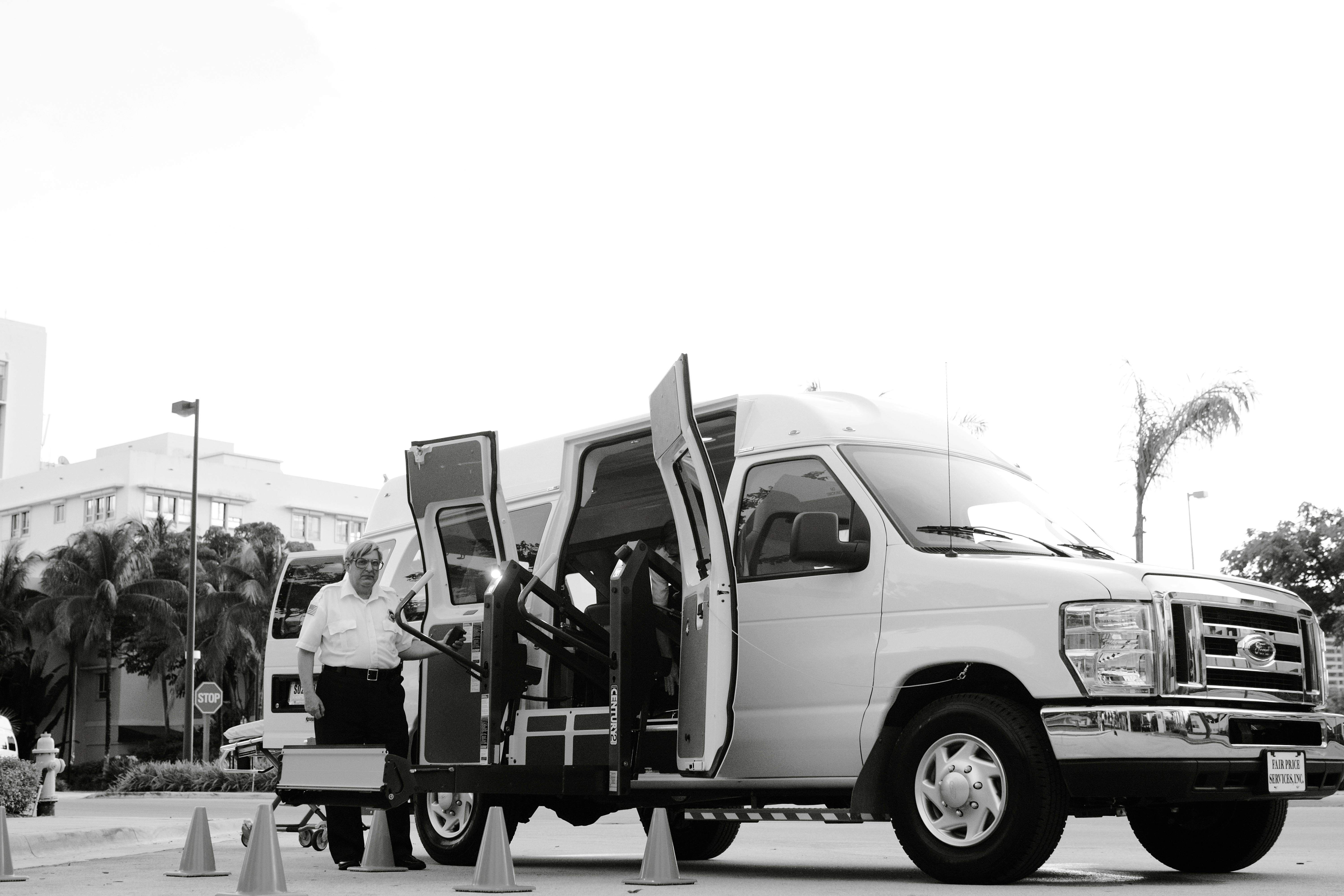
The MTA wants to triple the amount of training bus operators receive on wheelchair lifts installed on express buses, the head of New York City Transit announced Wednesday, as the agency faces years of mounting criticism over a system that has repeatedly failed riders with disabilities.
“We’re looking at giving them three times the amount of training that they are currently receiving,” said Demetrius Crichlow, president of New York City Transit. The agency also plans to place instructional information directly inside the buses so drivers have a quick reference guide for the specific hydraulic equipment on each vehicle.
Right now, bus operators learn how to work the lifts when they’re first hired and then sit through mandatory retraining twice a year. The new approach would push that to six sessions annually, according to Crichlow.
The need is real and long-documented. Unlike the 4,886 buses on local and Select Bus Service routes, which use low-floor designs with surface-level ramps, the 1,100 express coaches that run between the boroughs and Manhattan are high-floor vehicles with more complex hydraulic lift systems. Those lifts require a driver to leave the wheel, deploy the equipment, and assist the rider manually. When a driver doesn’t know how to operate the lift correctly, the whole process falls apart.
Advocacy groups say that’s exactly what keeps happening. Jean Ryan, who uses a motorized wheelchair and leads Disabled in Action, described drivers telling riders point-blank that they don’t know how to run the equipment. “The bus drivers say, ‘I don’t know, I have no idea what to do, I haven’t been trained,’” Ryan said.
The consequences extend beyond inconvenience. Some wheelchair users have stopped riding express buses altogether out of fear they won’t be able to board or exit safely. Jose Hernandez, a wheelchair user and president of the United Spinal Association’s New York City chapter, pointed out the pressure the process creates on a route built around speed. “It’s not something that should take 10 to 15 minutes and delay a bus that’s supposed to be express,” he said.
And when the process does slow things down, riders with disabilities often face hostility from fellow commuters. Debra Greif, a 67-year-old Brooklyn woman who uses a walker and previously relied on a wheelchair, said the abuse she faced from other passengers on express buses became too much to tolerate. “I’m not doing it anymore. I will not use an express bus because the abuse from other riders was ridiculous,” Greif said. Other passengers would tell her to take Access-A-Ride instead.
That attitude reflects a broader failure. Accessible transit is not a courtesy. It’s a legal obligation and a basic condition of living in a city where most people depend on public transportation. Telling a disabled rider to use a separate, often unreliable paratransit service rather than the same buses everyone else rides is exactly the kind of casual discrimination that erodes the promise of a functional, equitable transit system.
The MTA’s own data shows that across its bus network, accessibility devices have been deployed more than 112,000 times over a 12-month average. But the agency does not break out how many of those deployments involved express bus hydraulic lifts versus ramps on local routes, making it difficult to assess where failures are concentrated.
Express buses carry roughly 60,000 riders daily and make fewer stops than local routes, which is part of what makes them attractive for longer borough-to-Manhattan commutes. For wheelchair users who might benefit most from a faster, more direct trip, the broken lift problem has effectively taken that option off the table.
Crichlow’s announcement signals some recognition of the gap between the agency’s obligations and its performance. Tripling training sessions and putting lift-specific guidance inside each bus are practical steps. But the riders and advocates who have been raising these concerns for years will be watching to see whether the changes hold up in daily practice, when a driver is running behind schedule and a passenger in a wheelchair needs to board at a stop in Canarsie or Bay Ridge at seven in the morning.