
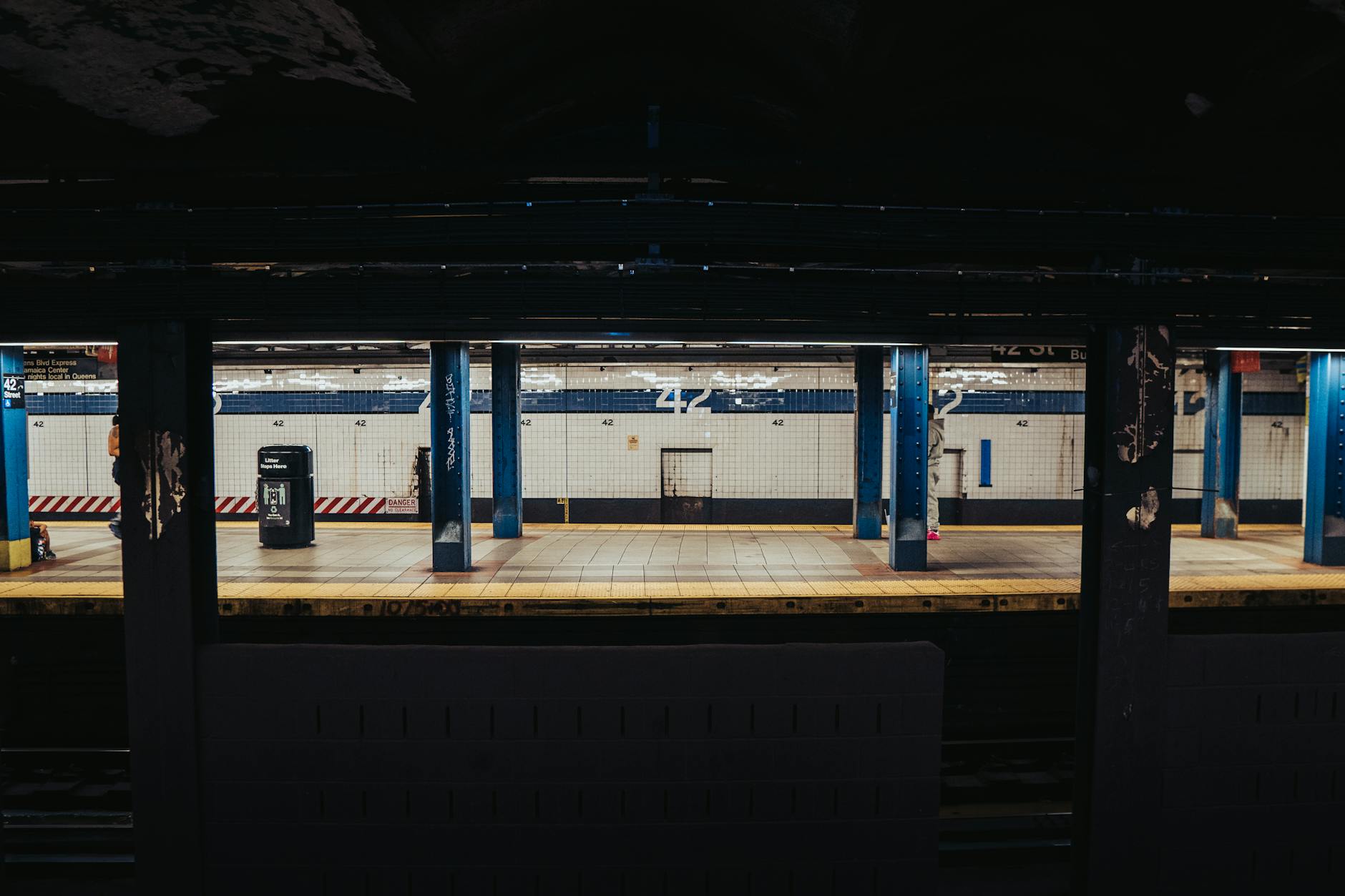
G train riders across Brooklyn and Queens face a series of service disruptions this month as the MTA pushes forward with a long-overdue signal overhaul on the crosstown line.
The agency announced Thursday night that multiple schedule changes will hit the G over the next few weeks, touching everything from overnight runs to full stretches of suspended service replaced by shuttle buses.
First up: this weekend. From 11 p.m. Friday through 5 a.m. Monday, the G won’t stop at its usual southern terminus. Instead, it’ll run past Church Avenue and continue along the F line all the way to Coney Island-Stillwell Av in Brooklyn. The MTA branded the extension with a name you’ll either love or roll your eyes at. They’re calling it the “G to the sea.”
Not a bad deal for riders who want to end up at the beach. But the more disruptive changes start Monday.
From April 13 through April 15, and again from April 20 through April 24, the G train will not operate between Court Sq in Queens and Bedford-Nostrand Avs in Brooklyn. That’s a significant chunk of the line, and it covers the heart of the route that riders in Greenpoint and Long Island City depend on for their daily commutes. T403 shuttle buses will cover G train stops between those two stations during both stretches.
Next weekend brings more of the same. From 9:45 p.m. on Friday, April 17, through 5 a.m. on Monday, April 20, shuttle buses again replace G service on the Court Sq to Bedford-Nostrand Avs segment. During that period, the G will run every 10 minutes between Church Av and Bedford-Nostrand Avs during daytime and evening hours.
So why all the disruption?
The MTA is modernizing the G train’s signal system, work that includes installing cables and new equipment throughout the line. Signal modernization means swapping out the old analog equipment for communications-based train control, known as CBTC. The technology lets trains communicate with each other in real time, tracking exact positions and speeds rather than relying on fixed block signals that only tell a controller whether a stretch of track is occupied.
The G’s signals haven’t been updated in nearly 100 years. That’s not a typo.
Old analog systems can’t tell controllers exactly where a train sits on the track. CBTC can. That precision means trains can run closer together safely, which translates to shorter waits and faster service. The MTA says CBTC has already delivered measurable improvements on the L and 7 lines, where the system is fully in place.
The agency shut the G down in phases during the summer of 2024 to complete a large portion of the modernization work. These spring disruptions are a continuation of that push.
Signal upgrades across the subway system are funded through the MTA’s $68 billion five-year capital plan, which allocates billions specifically for modernizing aging infrastructure. The G is one of several lines the agency is transitioning from analog to CBTC. It won’t be quick, and it won’t be painless for riders, but the MTA argues the long-term payoff justifies the short-term headaches.
For straphangers who rely on the G to connect Brooklyn neighborhoods like Williamsburg and Greenpoint to Queens, the next two weeks demand some planning. The T403 shuttle buses will make the same stops, but buses move slower than trains and don’t have the same frequency. Morning rush hours especially could get messy.
Details on the full schedule of changes were first reported by amNewYork.
The MTA has not announced a final completion date for the G train’s full CBTC installation. The agency typically rolls out signal modernization work in sections rather than all at once, which means riders should expect periodic service adjustments to continue throughout the year.
Still, the bigger picture here is hard to dismiss. A signal system that dates back a century is a liability, and every stretch of new cable installed gets the G one step closer to the kind of reliable, frequent service that riders on modernized lines now take for granted. The disruptions sting in the short term. Shuttle buses are nobody’s idea of a good commute.
But the G train, long treated as the neglected stepchild of the subway map, might actually be getting its moment.