
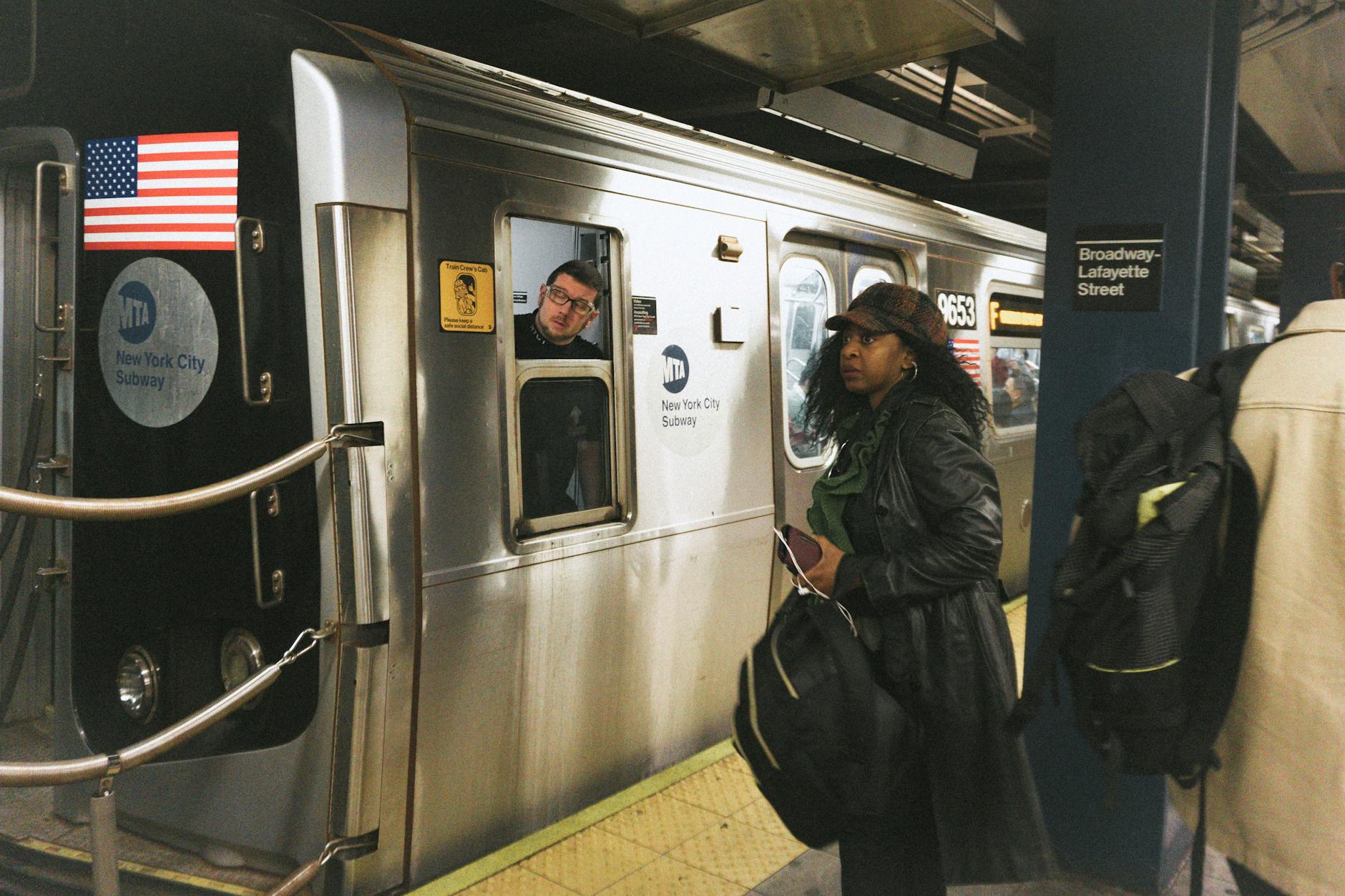
Assembly Member Jessica Gonzalez-Rojas showed up at four Queens subway stations Tuesday with a demand for the MTA: put elevators in, and stop stalling.
The four stops she’s targeting are all on the 7 train. 82 St-Jackson Heights. 90 St-Elmhurst Av. 103 St-Corona Plaza. 111 St. None of them are fully accessible to wheelchair users today. Gonzalez-Rojas, a Democrat from Queens, wants 82 St-Jackson Heights moved to the front of the line, with the other three folded into either the MTA’s current capital plan or the one that follows it. That next plan runs through 2029.
The numbers don’t lie. Only 6 of the 7 train’s 18 Queens stations are wheelchair accessible right now. The MTA’s committed to accessibility upgrades at 60 stations under its current capital plan, but it’s only named 30 of those stations publicly. Of the four Gonzalez-Rojas flagged, just 103 St-Corona Plaza has made it onto the agency’s upgrade list so far.
“They have committed to 60 stations to have accessibility upgrades, they’ve only outlined 30, so there’s room for more,” she said.
That gap is the argument. And it’s not subtle.
For a rider in a wheelchair who needs to get near 82 St-Jackson Heights, the closest accessible stop is Jackson Hts-Roosevelt Av/74 St. Eight blocks away. That’s the workaround the MTA has implicitly accepted. Eight blocks isn’t a detour for someone without mobility limitations. For someone who is elderly, disabled, or pushing a stroller through a Queens winter, it’s a wall.
“These neighborhoods are majority immigrant communities, they’re majority working class communities, they’re communities that rely on public transit more than almost anywhere else in New York City,” Gonzalez-Rojas said at the event, connecting the infrastructure failure to the specific demographics bearing its weight.
She didn’t stop there.
“These stations serve working families in Jackson Heights, Corona, Elmhurst, and East Elmhurst every single day,” she said. “Yet, decades after the ADA was passed, accessibility law became law, these stations remain out of reach for too many of our neighbors.”
The Americans with Disabilities Act passed more than three decades ago. The gap between what that law promised and what the 7 train delivers in Queens is still wide, and Gonzalez-Rojas is making it a campaign issue. She’s running against state Sen. Jessica Ramos, also a Queens Democrat, and Tuesday’s action put transit equity at the center of that race.
Stephanie Rodriguez was there too. She came with a young child and spoke about what it’s actually like to use these stations without elevators. She can get her stroller up the stairs, she said, because other riders help. Don’t mistake that for a solution.
“Sometimes I don’t even have to ask for help; New Yorkers, we show up for each other,” Rodriguez said. “But it’s time that our government shows up for us and does right.”
That’s the lived version of the policy debate. Rodriguez isn’t waiting on a capital plan. She’s navigating stairs with a kid every time she rides, counting on strangers to make up for what the system won’t provide.
The assembly member’s push follows initial reporting on her effort to push the MTA toward more 7 train elevator installations. The case she’s making isn’t complicated. The MTA has room in its own commitments to add these stations. It’s acknowledged 60 stations need upgrades. It’s only accounted for 30. The remaining slots exist. Fill them.
The 90 St-Elmhurst Av station sits in roughly the same position as 82 St-Jackson Heights, with no accessible alternative nearby. Riders there face the same calculation: walk further or figure it out.
This stretch of the 7 line runs through some of the most transit-dependent neighborhoods in the five boroughs. These are communities where car ownership is lower, where the subway isn’t a convenience but the only practical way to get around. That context matters when you’re deciding which 30 stations fill out the rest of that pledge.
The MTA hasn’t publicly responded to the specific demands Gonzalez-Rojas made Tuesday.