
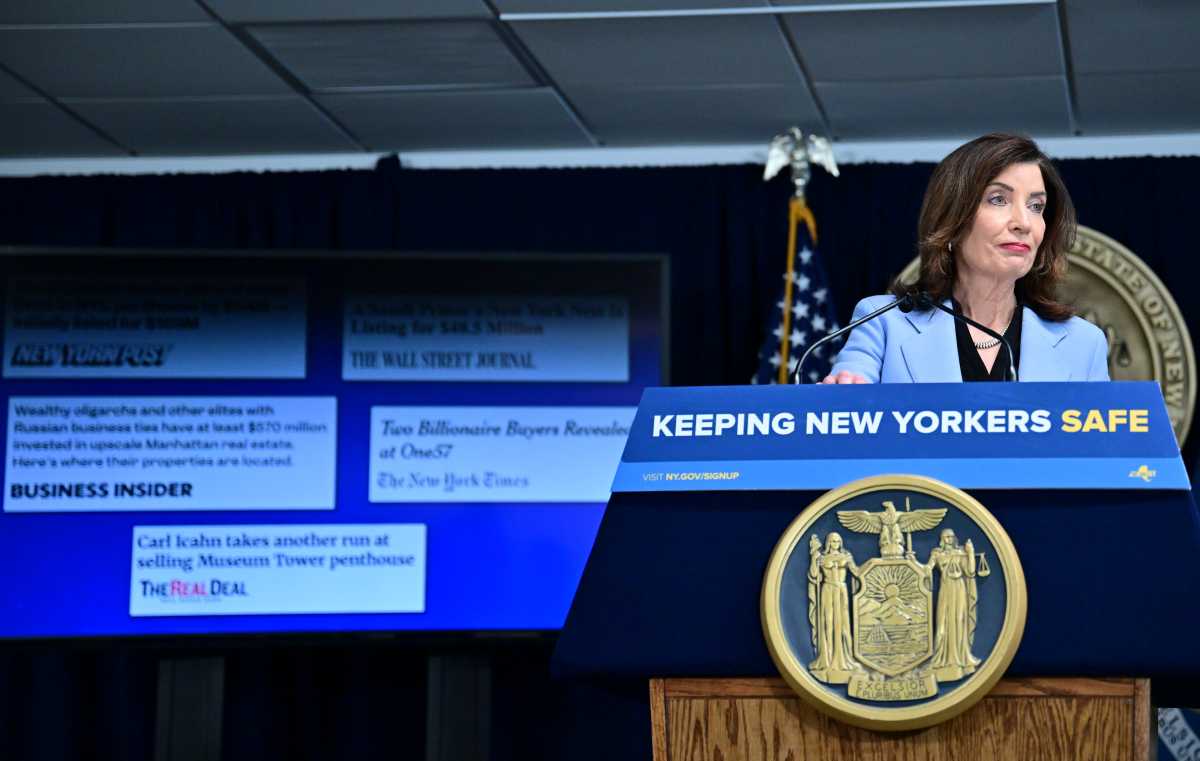
Gov. Kathy Hochul announced plans to seek state budget legislation that would let New York City impose a property tax surcharge on non-primary residences valued at $5 million or more.
The proposal, which Hochul’s administration says could generate at least $500 million a year in recurring revenue, drew quick praise from Mayor Zohran Mamdani and City Council Speaker Julie Menin. It also offered a potential path through a $5.7 billion budget gap that has defined Mamdani’s first months in office and forced hard choices on city services that millions of New Yorkers depend on.
For Brighton Beach to the Upper East Side, the politics here are personal. New York’s housing crisis didn’t arrive overnight, and the sight of darkened luxury windows in Midtown has grated on working-class residents who can’t find affordable apartments. Hochul’s proposal speaks directly to that frustration, casting the surcharge as a way to shift more of the tax burden onto wealthy property owners whose New York City homes sit empty for most of the year.
“New York City is the greatest city in the world, and the people who call it home should not be left carrying the burden alone,” Hochul said in a statement. “If you can afford a $5 million second home that sits empty most of the year, you can afford to contribute like every other New Yorker.”
The governor will include legislation in the state budget that, if approved by the Legislature, would give the city authority to levy the surcharge. A source familiar with the proposal told amNewYork that additional details still need to be worked out with lawmakers and city officials, but the administration expects the plan to use multiple tax brackets and raise at least $500 million annually. That’s recurring revenue, not a one-time fix.
Scale matters here. A 2023 Housing and Vacancy Survey conducted by the city’s Department of Housing Preservation and Development counted about 58,800 units held for seasonal, recreational, or occasional use across the five boroughs. The survey doesn’t break out how many of those units are worth $5 million or more, so the true taxable pool is still unclear. What’s not unclear is the direction Hochul wants to go.
Mamdani had been pushing the governor to raise taxes on the city’s highest earners and most profitable corporations to fund his agenda. He got something close to what he asked for. He called the proposal a step toward closing the city’s budget gap by taxing “the ultra-wealthy and global elites with a pied-à-terre tax.”
“Alongside the governor, our administration is fighting every day to make sure we address this fiscal deficit fairly, where the wealthy contribute what they owe and our budget reflects our commitment to the working New Yorkers being priced out of our city,” Mamdani said.
That’s a coalition worth watching.
Menin approved, but with conditions. She said the property tax surcharge should be part of a broader package, pointing to the Council’s proposals to raise additional revenue from top earners. Those include changes to the PTET and adjustments to the UBT/PIT credit. She called Hochul’s plan “a smart, sensible proposal” that would generate significant new revenue to help fund city services, but she wants more tools on the table.
Menin’s broader package instinct isn’t wrong. Five hundred million dollars is real money. It doesn’t close a $5.7 billion gap alone.
The path forward runs through Albany. Hochul’s legislation needs the Legislature’s approval before the city can levy a single dollar of the surcharge. Legislative negotiations on New York’s budget have a way of chewing up proposals that looked solid in April. The details still being worked out, including the number of brackets and rates, give lawmakers plenty of room to reshape the bill, weaken it, or walk away entirely.
What Hochul has done is set the terms. She’s put a number on who pays, $5 million and up, and she’s named a floor for what the city should get. Mamdani has his opening. Menin has her ask on the record. The pressure now sits squarely with the Legislature, and New Yorkers watching their rents climb will be keeping count.