
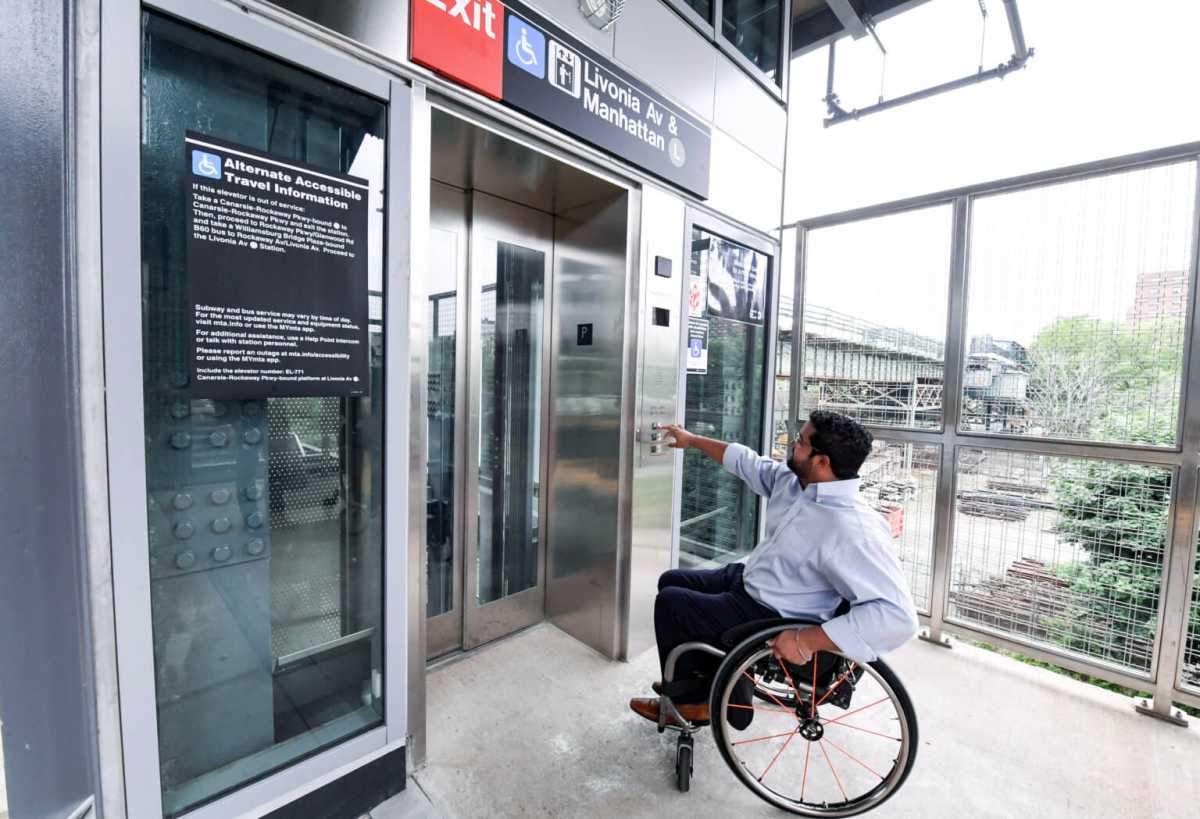
The MTA is using private money to speed up subway accessibility upgrades, and the numbers show the strategy is working.
Columbia University will contribute $33 million toward a package of improvements at the 125 St 1 station, covering three new elevators and a broader set of structural upgrades to the 121-year-old station. Under the deal, the MTA handles design and construction while Columbia funds a share of the work tied to its expanding Manhattanville campus. The university needed wider west-side escalators to handle increased rider demand. The MTA needed to bring the aging station into compliance with accessibility standards. One unified project delivers both, cheaper than two separate contracts would have.
This is the public-private partnership model the agency now calls one of its sharpest tools. And city riders are already seeing results beyond the Columbia deal.
This month, the MTA opened a new elevator at the 59 St-Columbus Circle station. Not just paid for but actually built by the developer Global Holdings. That’s a meaningful shift: a private developer taking on construction risk at a major transit hub, freeing MTA resources for other projects. The 59 St-Columbus Circle station already met accessibility standards, but the new elevator extends around-the-clock access at one of the system’s busiest interchange points.
Quemuel Arroyo, the MTA’s first-ever Chief Accessibility Officer, and Jamie Torres-Springer, president of MTA Construction & Development, laid out the broader case in a joint op-ed this week. Both men wrote from direct experience. Arroyo has mobility needs himself. Torres-Springer spent years carrying strollers up and down subway stairs as a parent. “None of us should be left stranded by transit,” they said.
That personal framing backs a genuinely striking set of statistics.
Since 2020, MTA Construction & Development has made 57 stations accessible across the system. More in five years than in the previous ten combined. Construction is already underway at another 40 stations. The 2025-2029 Capital Plan calls for at least 60 more subway stations, six railroad stations, and 45 elevator replacements on top of that.
When all of it is finished, the MTA projects 272 fully accessible stations systemwide. That figure more than doubles the number that existed in 2019 and means nearly 70 percent of all subway rides will start or end at an accessible station.
For New Yorkers who rely on elevators, this isn’t abstract math. Brighton Beach, the neighborhood I grew up in, has a station. Plenty of outer-borough stops don’t. Riders with mobility needs, parents with strollers, older adults navigating a system built more than a century ago all feel the gap between what the subway is and what it needs to be. The city’s disability advocacy community has pushed the MTA on this for decades, and the pace of change has historically been slow.
What’s different now is the money model. The agency can’t build its way to full accessibility on public capital alone. The 2025-2029 Capital Plan is a record investment, but the MTA faces persistent cost pressures and a backlog of deferred maintenance that touches every borough. Public-private partnerships let the agency bundle private needs, like a university’s campus expansion, with public obligations, like ADA compliance, into a single contract. The result is faster delivery and lower cost per project.
Columbia’s $33 million contribution is the clearest example yet of that logic playing out at scale.
MTA Construction & Development says it’s been busier than ever on its own, running elevator and escalator replacements across two boroughs and 11 subway lines simultaneously. The partnership track and the in-house track aren’t competing. They’re running in parallel, which is exactly how an agency managing 472 stations has to operate if it wants to hit its targets.
Arroyo and Torres-Springer framed it plainly: “Using every tool at our disposal, we’re working hard to make sure everybody can get on board.”
The 125 St 1 station project has no announced completion date yet in the MTA’s public materials, but the Columbia deal is already signed. Work is coming.