
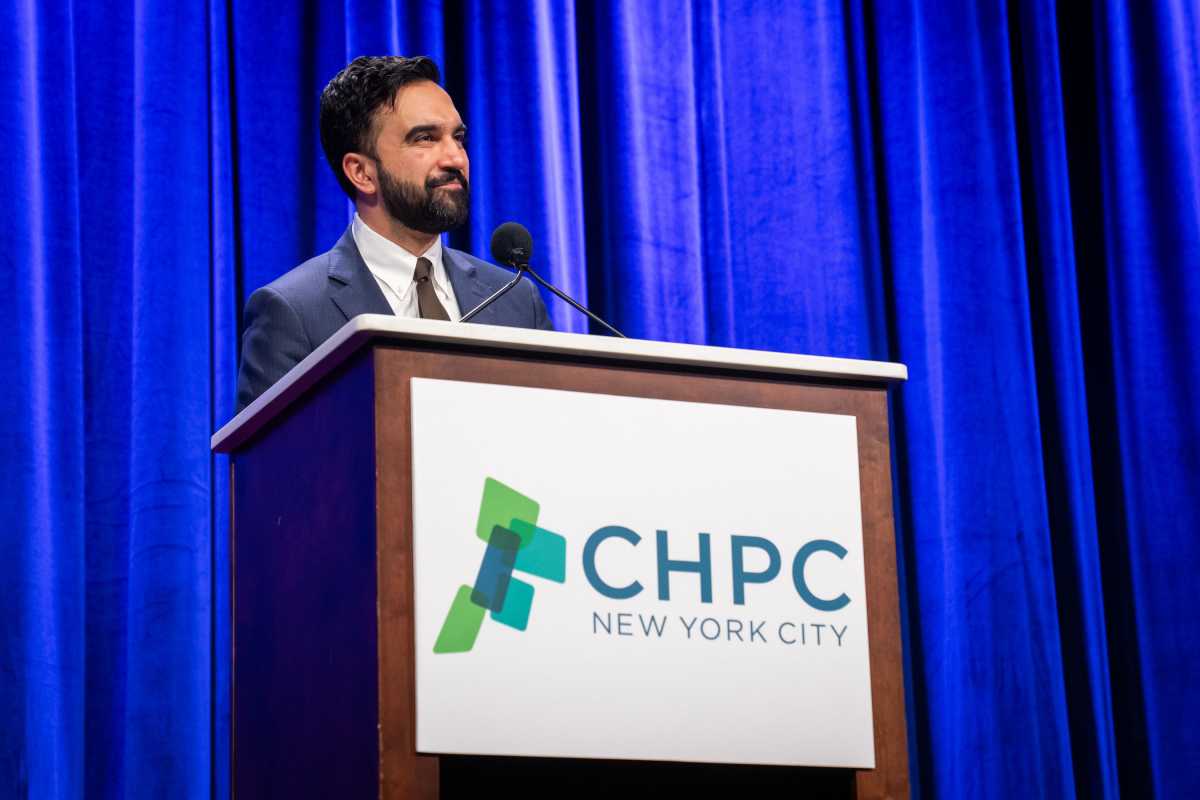
Mayor Zohran Mamdani’s administration launched a city-backed insurance program Thursday aimed at cutting property and liability premiums for rent-stabilized and affordable housing across New York City.
The plan, which City Hall calls a first of its kind, targets coverage for 20,000 homes by 2027 and 100,000 homes by 2030. Insurance costs for this housing stock have more than tripled since 2017, the mayor’s office said, and rising premiums have become one of the biggest drivers of building operating costs and the city’s own affordable-housing spending.
“We cannot take on the housing crisis without confronting one of the fastest-growing costs facing New Yorkers: insurance,” Mamdani said. “That’s why we’re creating the first city-backed insurance program, to help New Yorkers stay in their homes, give building owners the support they need to make repairs, and build a city that New Yorkers can actually afford.”
The math behind that argument is striking. Every $100 increase in insurance costs requires $1,200 more in city capital for new affordable-housing transactions, according to the administration’s release.
Three city agencies will run the effort: the New York City Economic Development Corporation, the Housing Development Corporation and the Department of Housing Preservation and Development. HDC is expected to issue a request for proposals for an actuary or risk consultant this week. NYCEDC plans to issue a request for expressions of interest this summer on how the program should be structured and operated. City Hall said the program is designed to become self-sustaining over time.
Deputy Mayor for Housing and Planning Leila Bozorg framed the initiative as leveraging scale. The city’s goal, she said, is to use “the city’s purchasing power to lower insurance premiums.” HPD Commissioner Dina Levy was more pointed, calling soaring insurance costs “a market failure that has gone uncorrected for too long.”
The announcement dropped in the middle of the city’s annual rent-setting fight, and the timing wasn’t accidental. Landlords and tenant advocates have spent weeks trading competing Rent Guidelines Board reports over whether rents should rise or be frozen. Earlier this month, the board’s 2026 Price Index of Operating Costs found owner costs for buildings with rent-stabilized apartments rose 5.3%, including a 10.5% jump in insurance and an 11.0% spike in fuel. Those numbers anchor the landlord argument for increases.
But the board’s 2026 Income and Affordability Study, also released Thursday, cut the other way. It found 51.6% of renter households pay 30% or more of their income toward rent. Unemployment climbed to 5.2% in 2025. Residential evictions rose 9.7% citywide.
Both reports land in front of a Rent Guidelines Board that will soon vote on 2026 rent adjustments for roughly one million stabilized apartments. Neither side is backing down.
The insurance plan, covered by amNY, drew a measured welcome from some landlord-aligned groups even as the broader politics stay tense. New York Apartment Association CEO Kenny Burgos said the industry appreciates Mamdani taking on the insurance problem. Still, small landlords operating on thin margins have privately questioned whether relief arrives fast enough to prevent more buildings from falling into disrepair or distress before 2027.
It’s a real concern. Tripled premiums don’t wait.
Small operators across the five boroughs don’t have the reserves that larger real estate companies hold. When premiums spike, repairs get deferred. Deferred repairs mean code violations. Violations put rent-stabilized units at risk in ways that hurt tenants, not just owners.
City Hall’s interagency structure is meant to move faster than a typical government program. HDC’s actuary request this week signals the administration wants to build the actuarial case for a pooled risk model before summer ends. The NYCEDC expressions-of-interest process will shape whether the program is run through a public entity, a nonprofit, or some hybrid private structure. Officials haven’t locked that in yet.
What’s clear is that Mamdani is trying to squeeze more affordable housing output from the same city dollars, and insurance is where he’s chosen to start. The New York City Housing Development Corporation has existing relationships with thousands of affordable buildings across the five boroughs, giving the program a ready roster of potential participants from day one.
The rent guidelines fight will peak at public hearings this spring. The insurance program’s first concrete results won’t show up until next year at the earliest.
Burgos and the apartment association are watching. So are their members.