
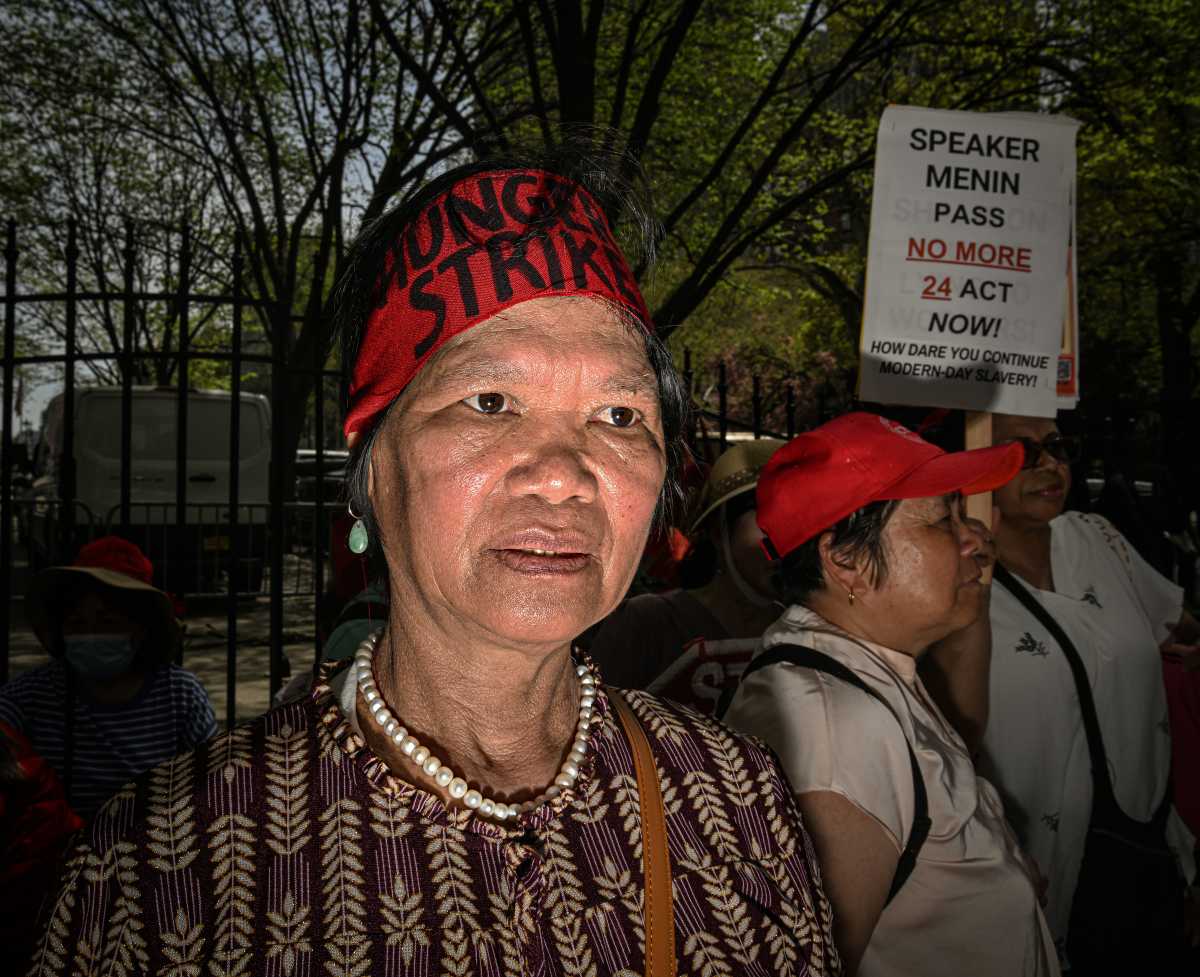
Dozens of home care workers launched a hunger strike outside City Hall on April 16, pledging to refuse food until the City Council passes legislation ending the 24-hour workday.
The workers, predominantly senior and immigrant women, had already spent weeks camped on the Broadway side of City Hall in a sit-in. Thursday’s escalation came after Mayor Zohran Mamdani and City Council Speaker Julie Menin stayed silent despite earlier expressions of support for the workers’ cause. So the aides stopped eating.
“We have been fighting together against the 24-hour workday for a very long time,” said worker Cai Qiong Liu. “We’ve set aside our family responsibilities and jobs to take part in actions again and again. Through our hunger strike, we will clear away the dark clouds and bring back clear skies. The 24-hour work system is the root of this harm. We must eliminate it as soon as possible.”
The workers chanted “No more 24” through unusually sweltering April heat, holding signs directed at Mamdani and Menin, calling for an immediate commitment to pass the bill. Nothing came from City Hall.
The situation carries a particular bite for Mamdani. In 2021, then-Assembly Member Mamdani joined a hunger strike outside City Hall alongside taxi drivers crushed by medallion debt. That action helped lift his public profile and set him on a path to the mayoralty. Now home care workers are camped at the same steps, using the same tactic, and waiting for a response from the man their protest helped make famous.
City Comptroller Brad Lander showed up Thursday to call that out directly. He reminded the crowd of the 2021 taxi workers’ strike and drew the line between that moment and this one without leaving room for ambiguity.
“The last time I was out here with people who were going on a hunger strike was when the taxi workers facing crushing medallion debt came out here and went on strike to demand tax relief,” Lander said. “And those workers, through a brave hunger strike, won the relief to their medallion debt and were able to work and live in dignity.”
Lander didn’t stop there.
“That did indeed help launch the career of our elected mayor,” he told the crowd. “What we are saying to you today is thank you for your courage and your bravery, we stand alongside.”
It’s a pressure play. Lander’s framing puts Mamdani in an uncomfortable position: the mayor built political capital partly on the back of a hunger strike, and he hasn’t used any of that capital to help the people staging one now.
The workers themselves describe a grinding, dangerous reality. Home health aides working 24-hour shifts can’t sleep properly, can’t care for themselves, and argue they can’t adequately care for their clients either. They say that being older and immigrant makes them easier targets for exploitation by employers who expect round-the-clock coverage with no real break built in. Fatigue isn’t an abstract complaint here. It’s a safety issue for patients.
The demand isn’t complicated. Pass a bill. End the 24-hour shift. Give home care workers the same basic labor protections that most New York workers take for granted.
What’s complicated is the political math. Mamdani rose through immigrant-rights and labor circles. Home care workers are exactly the constituency his coalition was built on. Menin leads a Council that prides itself on worker-protection legislation. The silence from both offices isn’t just a policy problem. It’s a credibility problem.
City Hall hasn’t moved. The workers aren’t eating.
These aren’t young activists looking for a moment. They’re older women, many of them immigrants, who spent years tending to the sick and elderly in private homes across the five boroughs. They didn’t want to sleep on pavement outside a government building in spring heat. They didn’t want to stop eating. They got here because every other approach ran out.
The International Labor Organization and domestic labor advocates have flagged 24-hour care shifts as a structural abuse point in home care systems for years. New York has the political infrastructure to fix it. What it’s been missing is the political will.
Lander showed up. Mamdani and Menin didn’t.