
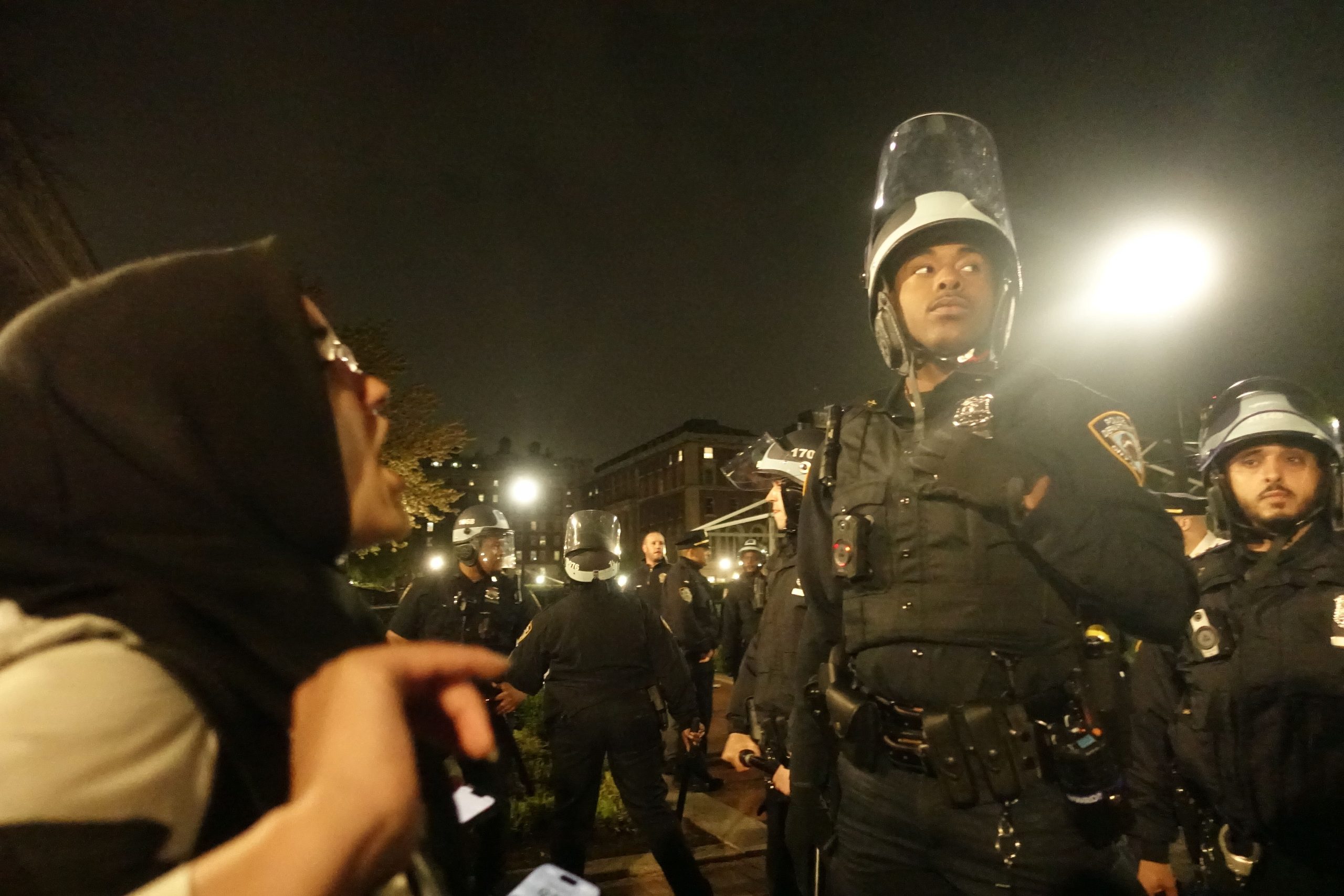
Mayor Zohran Mamdani has until April 25 to decide whether to veto a City Council bill creating protest buffer zones around schools, and his allies are pushing hard for exactly that.
Nearly a dozen organizations sent Mamdani a letter Friday urging him to reject the bill targeting “educational facilities,” warning that its language is so sweeping it could restrict demonstrations outside virtually any building in the five boroughs. The pressure campaign targets one of two so-called buffer zone bills the Council passed on March 26, both aimed at curbing what sponsors called hate crimes across the city.
The religious sites bill sailed through 44 to 5, a veto-proof margin that leaves Mamdani no practical path to block it. The educational facilities bill is a different story. It passed 30 to 19, close enough that a mayoral veto would stick.
The letter landed Friday and carried signatures from the steering committee of the People’s Majority, United Auto Workers Region 9A, the union representing CUNY professors, Desis Rising Up and Moving, and several other organizations. Their core complaint is definitional. The bill, they argue, doesn’t limit itself to traditional schools. It covers any place where “educational programming takes place,” a phrase they say is broad enough to rope in the city’s more than 200 public libraries along with countless other locations.
“By defining ‘educational facility’ as any place where ‘educational programming takes place’ and not solely traditional educational institutions, 175-B functionally subjects any building in this city to the proposed law, including the more than 200 public libraries,” the letter said.
The groups called the bill a “radical overreach” that limits free speech and endangers New Yorkers.
“The broad reach of the legislation again means that the NYPD must create a plan for just about every building in this city,” the letter said.
Council Speaker Julie Menin has defended both bills as a necessary response to rising hostility across New York. “The increase in hateful acts across the city is absolutely abhorrent, and we have to do something about it,” she said last month.
The buffer zone laws grew directly from protests outside two Manhattan and Queens synagogues where some demonstrators chanted in support of Hamas. The synagogues were hosting an organization that helps American Jews emigrate to Israel and the Israel-occupied West Bank. Mamdani took criticism at the time for comments that some felt didn’t go far enough in condemning the pro-Hamas slogans. The educational facilities bill has a separate but related origin: college campuses across the city were shaken by protests against the Gaza war, with the NYPD clearing a pro-Palestinian encampment at City College in April 2024.
Mamdani told reporters Thursday he hasn’t made up his mind. “I’ve heard from a number of New Yorkers about their concerns about aspects of this legislation,” he said. “And I will be making a decision on that shortly.”
That’s not a no. But it isn’t a yes either, and the clock is running.
The mayor’s 30-day window closes April 25. If he signs both bills, he hands critics in the labor and activist left a concrete grievance heading into what’s already shaping up as a complicated political season. If he vetoes the schools bill, he’ll face charges from the Council majority that he’s soft on antisemitism and campus disorder. If he does nothing and lets the bill become law without his signature, he splits the difference in a way that satisfies no one completely.
The CITY’s coverage of the buffer zone fight traces the bill’s path from those Queens and Manhattan synagogue demonstrations through the Council vote and into the current standoff between the mayor’s office and his own political base.
Free speech advocates had already turned out at City Hall on February 25 to protest both bills before the votes were cast. Their concerns and the letter-writing coalition’s concerns overlap: both center on language they say is vague enough to let police draw buffer zones around buildings that have nothing to do with traditional schooling.
The People’s Majority steering committee, UAW Region 9A, and the other signatories don’t have a veto themselves. Mamdani does. He has five days to use it.