
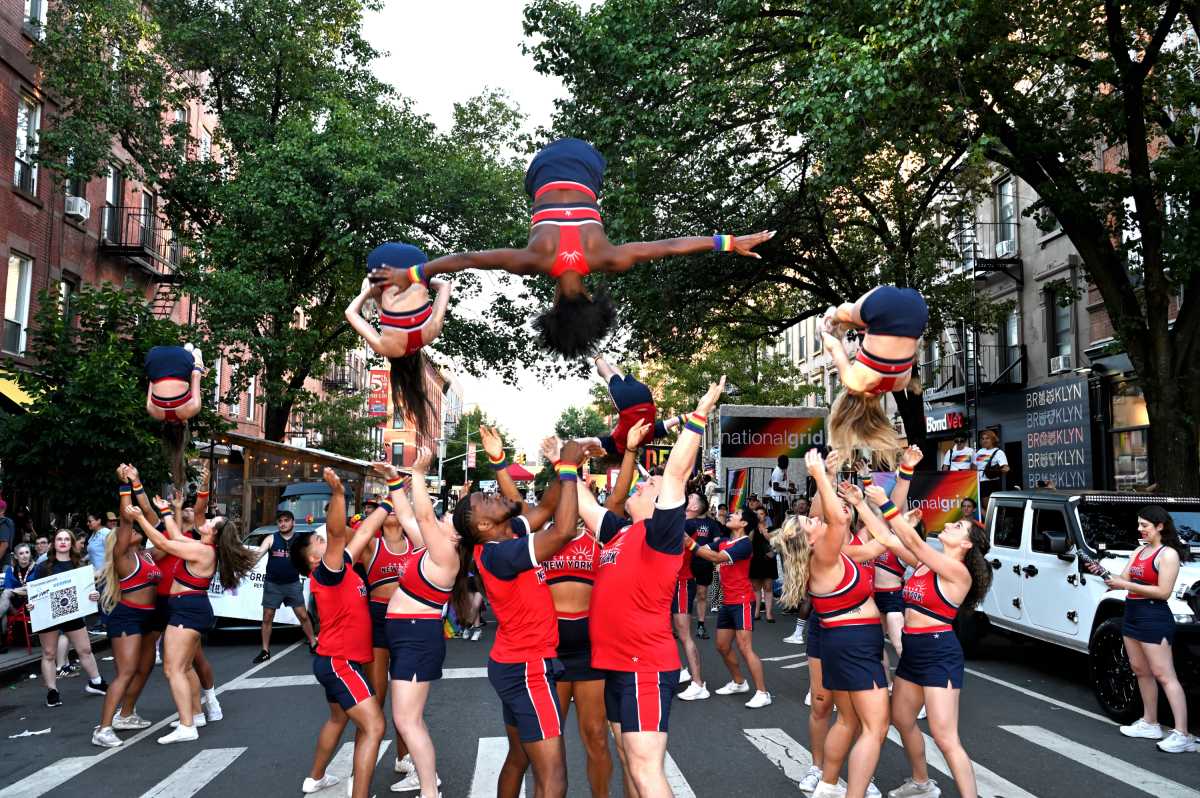
Brooklyn Pride turns 30 this June, and the borough’s signature twilight march along Fifth Avenue is set to draw its biggest crowd yet after nearly three decades of building something genuinely its own.
The parade’s roots go back to 1996, when a small group of Brooklyn residents decided the city’s most populous borough deserved its own celebration. Jerry Allred and Sonia Galarza led that early push and went on to serve as Brooklyn Pride’s original chairs. Dale Gates was also among the founders, according to a document from the organization’s 20th anniversary in 2016. None of them had a template. The Queens Pride Parade and Multicultural Festival had already carved out space in the neighboring borough for a few years, and that success made the case for Brooklyn.
On June 14, 1997, Brooklyn hosted its first Pride Parade and multicultural festival, starting at Third Street and Fifth Avenue and ending at Prospect Park.
“There were a lot of great relationships between people from Queens and Brooklyn,” Mickey Heller, Brooklyn Pride’s co-chair, told Gay City News. “And then, after Queens started, Brooklyn felt it was time to have our own.”
Heller, a Bronx-born attorney who has lived in Brooklyn for several decades, didn’t come into Brooklyn Pride through the front door. He first got involved in 2007 and 2008 when someone asked him to drive former Brooklyn Borough President Marty Markowitz’s parade float. That volunteer gig turned into more volunteer work, and by 2012 he’d taken the co-chair role he still holds today. He’s now the longest-serving board member or chair in Brooklyn Pride’s history.
The twilight format, which sets Brooklyn’s parade apart from every other Pride event in New York City, wasn’t exactly a grand vision from the start. It was partly practical. After the first year, the board decided the parade should run at night, and scheduling wasn’t just about aesthetics. The annual Puerto Rican Day Parade falls the following day, meaning Sunday was never an option. Brooklyn Pride couldn’t compete with that footprint, so the board found a different lane.
Good call.
The dusk-to-dark march along Fifth Avenue has become one of the most distinctive Pride events anywhere in the city. Families drag lawn chairs to the curb. Dogs wear flags. Residents lean out from fire escapes and windows as the procession moves past. Bars and spots like Ginger’s and Good Judy spill their crowds onto the sidewalks. The whole stretch takes on a block-party quality that feels less manufactured than a lot of Pride events have become. As Gay City News has documented across the parade’s history, what started as a workaround became the event’s defining character.
That character didn’t build itself. It took years of consistent organizing, community buy-in, and the kind of institutional memory that Heller represents. Brooklyn Pride now operates as a year-round nonprofit, and the June march anchors a broader calendar of events. The second Saturday of June has become a fixed point for queer Brooklynites the way other neighborhood traditions lock themselves into the calendar.
There’s also something worth tracking in the geography. Fifth Avenue in Park Slope and the surrounding blocks have changed significantly since 1997. Rents are up. Long-standing LGBTQ+ businesses have come and gone. The neighborhood’s demographics have shifted in the ways that neighborhoods shift when they get expensive and visible. Brooklyn Pride has stayed rooted along that corridor despite all of it, which isn’t nothing when you look at how many community institutions get priced or pressured out.
The 30th edition of Brooklyn Pride is scheduled for the second Saturday of June 2026. The route along Fifth Avenue will look familiar to anyone who’s made the march before, starting near Third Street and heading toward Prospect Park, the same general arc as that first parade nearly three decades ago. What’s changed is scale, visibility, and the weight of history behind it. Thirty years of showing up on the same streets, in the same twilight window, with the same mix of locals and newcomers and people who drove in from other boroughs because Brooklyn Pride has a reputation now.
Mickey Heller has been part of that continuity for nearly 20 of those 30 years, and he isn’t done yet.