
New York City is sitting on nearly 14,000 empty government jobs, and City Council’s latest budget math treats those vacancies as an $800 million windfall, even though the council says it still plans to fill every one of them.
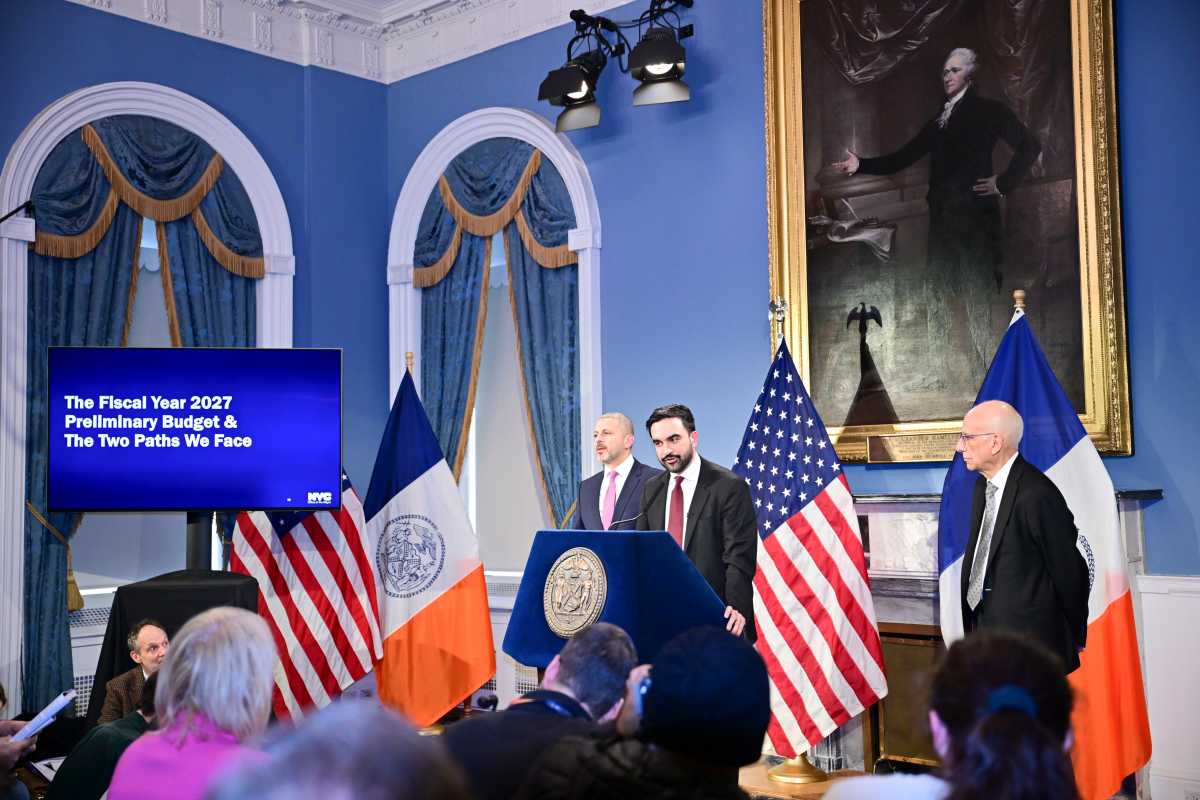
The $5.4 billion budget shortfall has City Hall and the council scrambling. Mayor Zohran Mamdani’s preliminary budget drew fire for including a property tax hike widely described as a last resort, but the council’s response carried its own puzzling move, one that budget experts say looks cleaner on paper than it actually is. The council factored in more than $800 million in savings from unfilled positions across city agencies while simultaneously insisting those positions would eventually be staffed.
“It’s one of those things in which there’s a kernel of truth, but the truth is actually much more complicated,” Thad Calabrese, a professor of public and nonprofit financial management at NYU Wagner and director of its finance specialization, told amNewYork.
The raw numbers are stark. As of January 31, the city had 13,294 vacancies out of 307,777 authorized positions, a municipal vacancy rate of about 4.3 percent. That’s citywide. Break it down by agency and the picture gets worse. The Department of Homeless Services leads at 26.36 percent vacant. The Department of Correction sits at 18.43 percent. The Department of Citywide Administrative Services comes in at 17.46 percent, the Department of Finance at 14.64 percent, and the Department of Housing Preservation and Development at 14.06 percent.
Those aren’t small margins.
Calabrese broke down why the savings argument has surface appeal.
“The math is quite simple, right?” he said. “Fewer employees means your personnel expenses will be lower and for New York City, like a lot of cities, a huge chunk of their annual spending are on these personnel costs. So, to the extent that you can keep them vacant, you will reduce your spending in the current year.”
That logic holds until it doesn’t.
A job in the Department of Finance, for instance, can generate more revenue for the city than its salary costs. A position at the Department of Homeless Services may cost more than its direct payroll when you count what the vacancy actually produces downstream, including effects on shelter costs, service delivery, and spending in other parts of the budget. Leaving those seats empty doesn’t just cut a salary. It can trigger a chain of secondary costs that show up somewhere else.
“The actual savings from vacancies oftentimes do not translate into the full amount that its advocates say it will, and part of it is because you have second-order effects or unintended consequences,” Calabrese said.
For residents in neighborhoods already stretched thin by cuts to city services, the distinction matters enormously. A 26 percent vacancy rate at the Department of Homeless Services isn’t an accounting line item. It’s fewer caseworkers on the street during a spring when shelter census numbers are climbing and federal funding is uncertain. The city’s current homeless services budget is already strained by rising costs the council and mayor haven’t fully resolved.
Mamdani and City Council Speaker Julie Menin have shown some willingness to work together despite early friction between their budget proposals. Both appeared at public events in recent weeks and expressed support for Gov. Kathy Hochul’s proposed pied-à-terre tax on second homes worth over $5 million owned by non-city residents. That kind of alignment is worth watching, but it doesn’t close a $5.4 billion gap on its own.
The Independent Budget Office has long tracked how the city’s workforce counts and vacancy assumptions feed into budget projections, and the gap between projected savings and real savings from unfilled positions has tripped up fiscal plans before.
The council’s $800 million vacancy assumption isn’t necessarily dishonest. Municipal budgets routinely carry vacancy savings as a planning tool. But counting savings from jobs you intend to fill treats the delay itself as a policy, and that’s a trade-off with real consequences for the agencies that already can’t get fully staffed. At the Department of Correction, an 18.43 percent vacancy rate in a facility environment isn’t a staffing footnote. It shapes conditions inside jails and the overtime costs that pile up when short-handed agencies try to cover gaps with existing workers.
Calabrese put it plainly: the city can book those savings in the current year. What it can’t do is pretend the costs don’t come due eventually, in overtime, in deferred service delivery, or in the harder-to-measure damage done when government agencies operate well below their authorized capacity.