
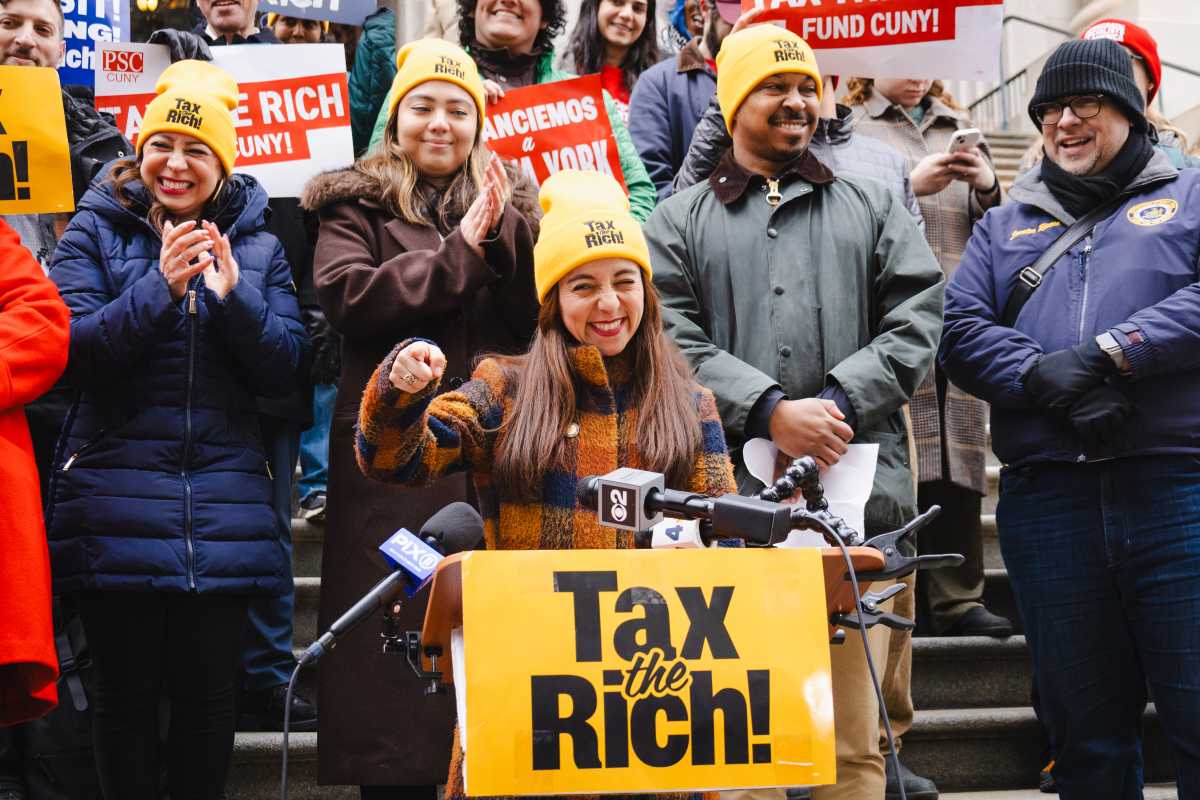
New York City’s proposed pied-à-terre tax on luxury non-resident homeowners won’t raise the $500 million Governor Hochul is promising, and it could leave the city worse off.
Governor Hochul, facing re-election pressure and a political base hungry for action against the ultra-wealthy, has shifted sharply from her earlier no-new-taxes platform to embrace what she calls a pied-à-terre tax. The proposal targets non-resident New Yorkers who own homes valued above $5 million, aligning her with Mayor Mamdani and a broader “tax the rich” message that has found plenty of traction on social media and in Albany hallways. But politically convenient and fiscally sound are two very different things.
The optics aren’t subtle. Remember when Representative Alexandria Ocasio-Cortez wore a dress with “Tax the Rich” splashed across it to the Met Gala? It turned heads. It didn’t pay anyone’s rent. The same gap between gesture and result threatens this proposal, which critics say is built more on narrative than on numbers.
Just weeks ago, Hochul was publicly encouraging wealthy former New Yorkers who relocated to Florida to come back, explicitly acknowledging that high earners are essential to funding the city’s social programs. This new proposal sends the opposite message. It’s far cheaper for someone with means to book a hotel for a few nights than to pay a steep annual tax on top of the already substantial city and state taxes they’re carrying.
The revenue math doesn’t hold up.
Fewer second-home owners means less spending at restaurants, in retail, and at entertainment venues across the five boroughs. Those aren’t abstract line items. They’re jobs, they’re small business revenue, and they’re the kind of economic activity that fills gaps the city budget can’t cover on its own. A tax designed to generate $500 million could instead trigger a net loss if enough high-net-worth owners decide the calculus no longer works.
Implementation is a separate problem entirely. New York City’s housing stock is dominated by co-ops, where ownership structures don’t resemble traditional property holdings in any clean or straightforward way. As AM New York has covered, building a fair and enforceable system to determine who gets taxed, and how, would be extraordinarily difficult given that complexity. The city doesn’t have a strong track record of designing tax mechanisms that can handle those edge cases without years of litigation and carve-outs.
There’s a housing supply consequence here too. Developers currently build luxury and market-rate units alongside affordable ones because the economics of the high end subsidize the lower tiers. Policies that make high-end investment less attractive don’t just shrink the luxury pipeline. They shrink affordable housing production right along with it, which is the last outcome a city with a severe housing shortage can afford.
“It’s easy to understand why this proposal is politically appealing,” one critic of the plan said. “It fits a narrative and resonates with a certain audience. But is the goal to score political points with headlines, or to achieve meaningful, lasting results?”
That’s the central question Hochul hasn’t answered.
New York’s property tax system genuinely needs reform. Nobody disputes that. The New York City Department of Finance has long faced criticism over inequities in how residential and commercial properties get assessed, and advocates across the political spectrum have pushed for a comprehensive overhaul for years. The pied-à-terre tax doesn’t address any of that structural dysfunction. It’s a targeted levy on a narrow slice of ownership designed to produce a headline number that justifies a political posture.
The city needs leaders from both the public and private sectors sitting down to work through alternative revenue sources with staying power, not slogans written for social media. Defunding the police didn’t cure crime. Building a wall didn’t fix immigration. Taxing the rich at the margins, without a coherent plan for what replaces the economic activity you’re taxing away, won’t solve poverty either. These issues don’t yield to bumper sticker politics, and New York’s fiscal future can’t afford to find that out the hard way.
Hochul has time to pull back from this approach and put real reform on the table. The Urban Land Institute and other serious policy organizations have done work on sustainable urban revenue models that don’t depend on chasing a shrinking pool of high-net-worth residents. That research exists. The political will to use it is what’s missing.