
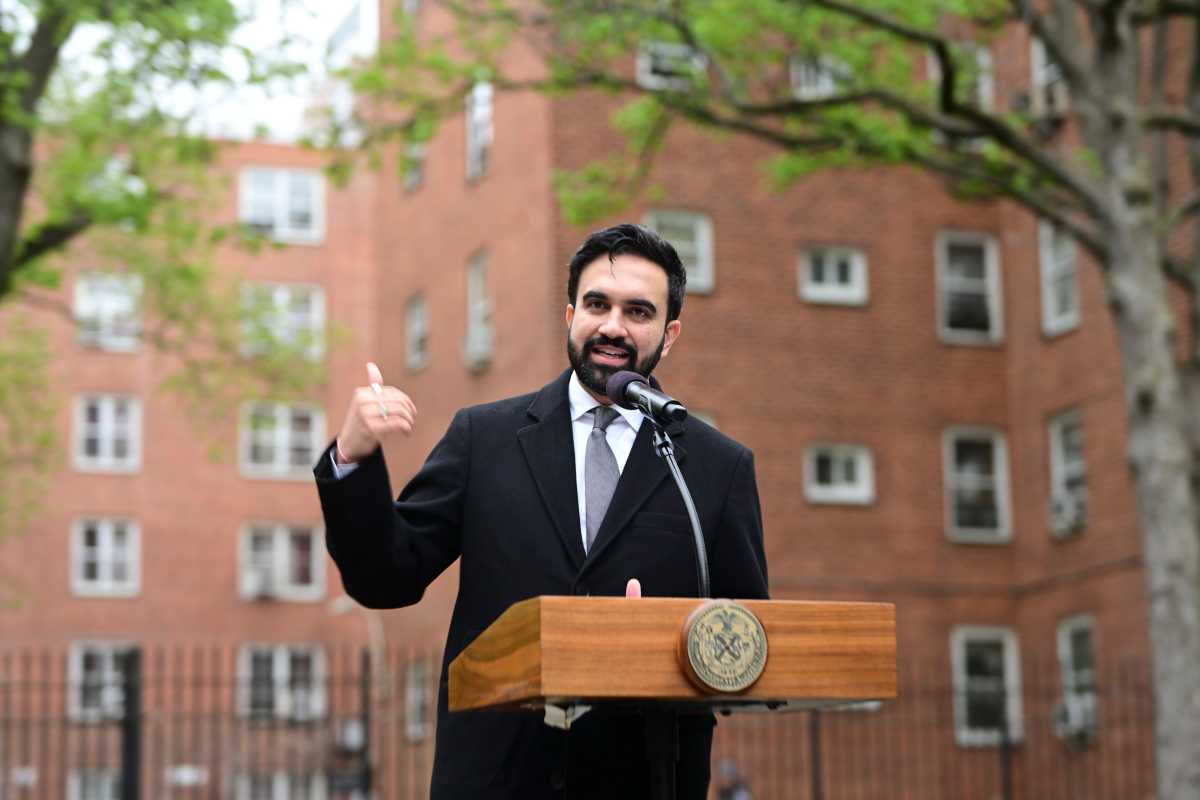
Mayor Zohran Mamdani stood at Woodside Houses in Queens on April 22 and announced a five-year NYCHA sustainability plan covering electric vehicles, induction stoves, heat pumps, and green jobs.
The agenda is sprawling. It calls for 150 electric vehicle charging stations across 150 NYCHA parking lots, 10,000 induction stoves replacing gas appliances, and electric heat pumps and cooling systems installed in 20,000 apartments. Efficient lighting and water upgrades would reach 45,000 units. The plan also targets waste infrastructure modernization and air quality improvements at 144 NYCHA properties across the five boroughs.
Mamdani picked Woodside Houses as his backdrop for a reason. The development was the first NYCHA property to receive electric heat pumps, back in 2023. Queens Borough President Donovan Richards told the crowd he had fielded fewer heat-related complaints from Woodside residents this past winter than he ever had before, a direct result of that earlier installation.
“We’ve seen here at Woodside Houses, the transformative impact of these heat pumps, not only in terms of carbon emissions, but also just quality of life and even cost,” Mamdani said.
That track record is already driving money. In February, Mamdani announced a $38.4 million investment to bring electric heat pumps to the Beach 41st Street Houses development in Edgemere. The success at Woodside, the mayor said Wednesday, helped justify that expansion.
“That is what this is about, it’s seeing what works in this city and then building on it so that more and more New Yorkers can benefit from it,” Mamdani said.
NYCHA CEO Lisa Bova-Hiatt was direct about what the plan means for residents.
“We’re transitioning away from fossil fuels, and at the same time, we’re generating savings that can be reinvested in building upgrades and maintenance,” Bova-Hiatt told reporters. “The impact for our residents is real.”
She also flagged the green-jobs piece, which she called transformative. The agenda projects that roughly 1,300 NYCHA residents will be hired for sustainability work tied to the plan. Not outside contractors. Residents. That distinction matters in public housing communities where unemployment and underemployment have historically run high.
“This work is truly beneficial in more ways than one, and in ways that will reverberate for decades and for generations to come,” Bova-Hiatt said.
Joining Mamdani and Bova-Hiatt at the announcement were Richards, Council Member Julie Won, Chief Climate Officer Louise Yeung, and Woodside Houses Residents Association President Tammy Reyes. Won represents Woodside in the City Council and has pushed hard on tenant quality-of-life issues in her district.
From a transit and infrastructure standpoint, the EV charging piece deserves more scrutiny than it typically gets at these announcements. NYCHA parking lots serve residents who can’t always afford newer cars, and the timeline for 150 stations across 150 properties is not yet nailed down publicly. The plan sets the target. Delivery schedules, funding sources for each component, and which developments get prioritized first are the details that will determine whether this becomes real change or a well-intentioned list.
What’s less debatable is the lived impact in developments that already have heat pumps running. Residents at Woodside spent winters without reliable heat for years. Gas stoves have been a persistent indoor air quality problem in dense public housing. Replacing 10,000 of them with induction units doesn’t just cut carbon. It cuts respiratory risk for families in apartments where ventilation is often inadequate.
NYCHA serves roughly 400,000 residents across the city, and its sustainability roadmap has drawn attention for pairing decarbonization goals with workforce development in a way that earlier city green plans did not. Whether the authority can execute across all five boroughs simultaneously, while managing its existing $40 billion capital backlog, is a separate and complicated question.
The NYCHA sustainability program is not a new concept, but the 2026 agenda represents the broadest single-year rollout the authority has attempted. For the 45,000 apartments slated for lighting and water upgrades, the math on utility savings could help offset operating costs that have squeezed the authority’s budget for years.
Bova-Hiatt made the financial case plainly. Savings from energy efficiency get reinvested in maintenance. That’s the theory. Woodside Houses, at least this past winter, gave it some proof.