
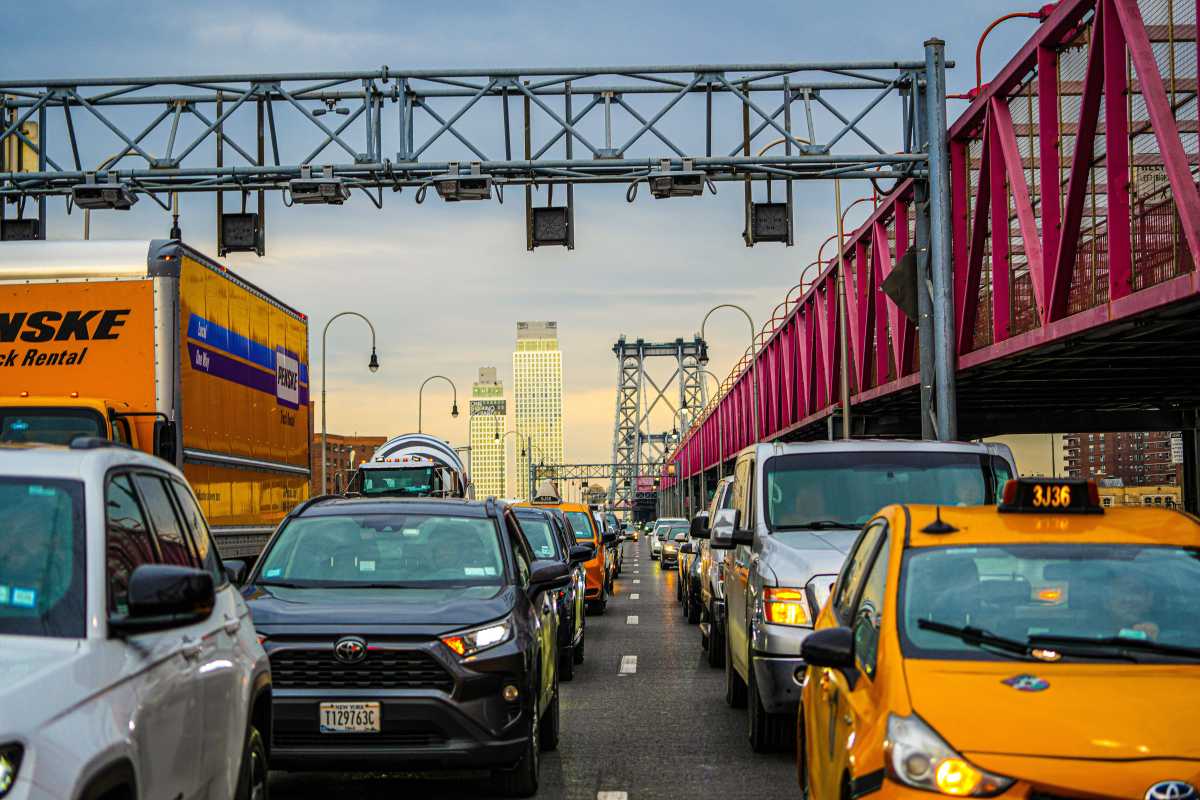
New York City officials announced $20 million in congestion pricing funds will replace hundreds of diesel trucks across the five boroughs, with applications opening April 22.
The announcement, timed to Earth Day, marks the latest spending decision from tolls collected since congestion pricing launched on Jan. 5 last year. The program charges drivers to enter Manhattan south of 61st Street, and the revenues have been flowing to a range of transit and environmental projects ever since. MTA Chair and CEO Janno Lieber said the clean trucks push is part of a broader pattern of spending the toll dollars on measurable environmental results.
“The clean trucks expansion is the latest of many environmental investments being funded by congestion relief revenues,” Lieber said. “It’s another step to ensure congestion pricing is delivering reduced traffic and cleaner air not only within the tolling zone but citywide.”
The $20 million will flow to the NYC Department of Transportation, which will use it to expand the NYC Clean Trucks Program through rebate incentives aimed at businesses that haul goods through the city. Replacement vehicles can be electric, hybrid, compressed natural gas-powered, or clean diesel. The DOT opened applications to truck businesses on April 22, and the total number of trucks swapped out will depend on what fuel types and sizes operators choose.
The program has history behind it. Since 2012, the NYC Clean Trucks Program has already replaced 714 diesel trucks, cutting fine particulate matter by 97%, or 24.3 tons per year, and slashing nitrogen oxides by 89%, equal to 418.6 tons per year. Those aren’t small numbers for a city where respiratory illness rates in low-income neighborhoods have long outpaced wealthier ones. Funding for the program was written into the more than $330 million mitigation plan included in the congestion pricing toll program’s environmental assessment, meaning this investment didn’t come as a surprise to planners.
Mayor Zohran Mamdani called the announcement “another win” for congestion pricing and framed it as a public health matter as much as a transportation one.
“This $20 million investment to replace polluting diesel trucks with clean, battery-electric alternatives is an investment in our lungs, in our neighborhoods, and in New Yorkers who deserve to breathe clean air,” Mamdani said. “I’m grateful for the close collaboration with our city and state partners as we continue to deliver safer streets, healthier communities and a greener future for New York City.”
To qualify for the rebate program, trucks must meet eligibility requirements that include doing business in a NYC industrial business zone. Full details are available at nycctp.com.
Worth remembering. Congestion pricing didn’t arrive quietly. When tolls went live in January 2025, critics hit back hard, arguing the program punished working-class drivers and small business owners who couldn’t afford to absorb the new costs of entering lower Manhattan. Outer-borough residents said they bore a disproportionate share of the burden. The political heat was real, and it lasted months.
It hasn’t vanished entirely, but the loudest anger has softened since the program’s first year. Officials at Wednesday’s event pointed to the clean trucks announcement as evidence that the toll revenue is doing what advocates promised: paying for projects that help the city breathe better, not just projects that keep trains running on time.
The MTA has been careful to show the money spreading past the subway system. Clean truck funding, alongside transit improvements, lets the agency argue that congestion pricing delivers broad benefits rather than just a subway rider subsidy. Coverage from amny.com of the announcement highlighted how officials framed the program as a citywide investment rather than a Manhattan-focused one.
For businesses that haul freight through the city’s industrial corridors, the rebate structure means they don’t have to absorb the full cost of trading in older diesel equipment. That’s the carrot the program has always relied on, and the new $20 million injection gives the DOT more room to extend those incentives to more operators.
Officials didn’t put a firm cap on the number of trucks they expect to replace with this round of funding. The number, they said, will vary based on truck size and the fuel technology each business chooses. Larger trucks cost more to replace, so the total fleet count will shift depending on which vehicles operators bring to the program. What’s fixed is the $20 million ceiling and the requirement that trucks operate within designated industrial business zones across the five boroughs.