
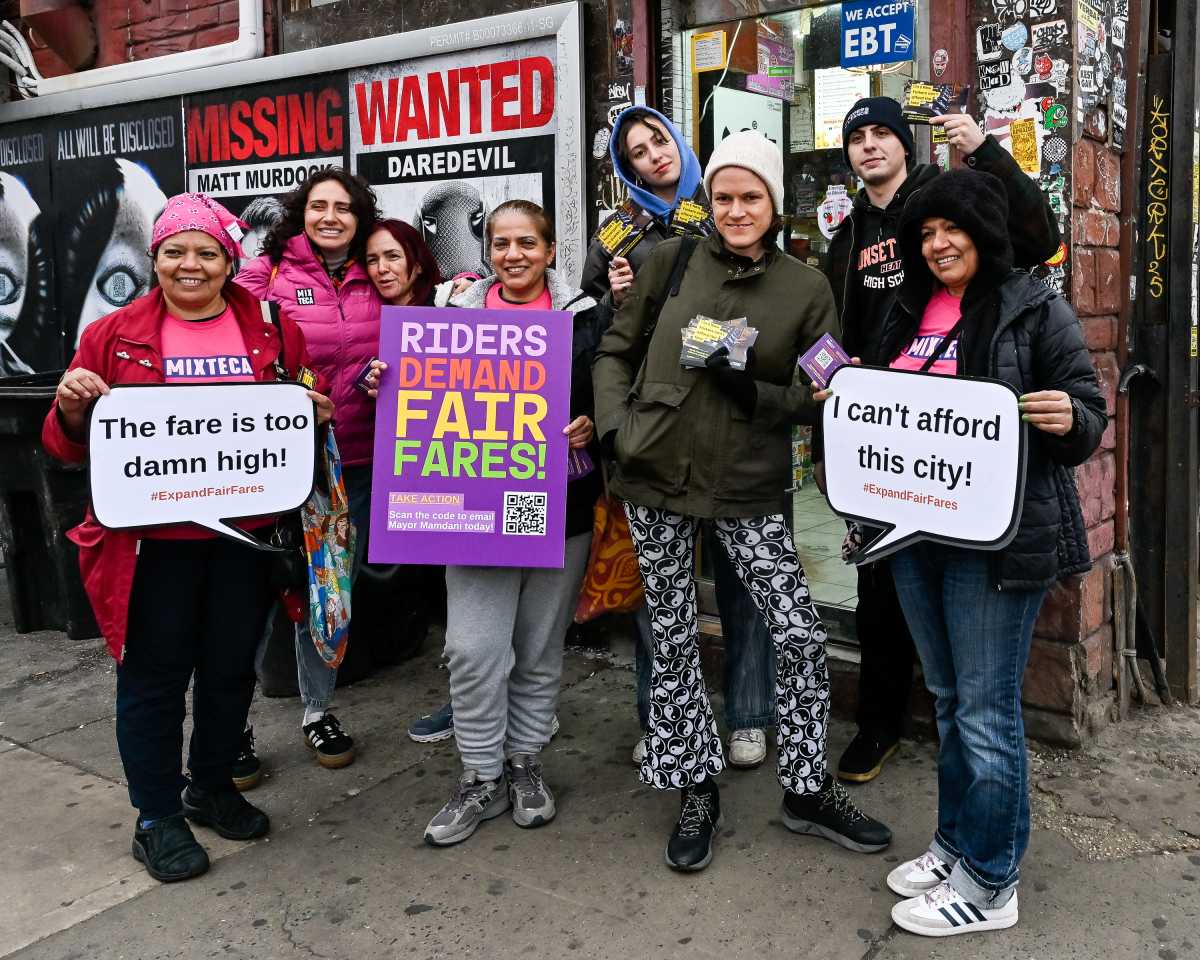
Mayor Zohran Mamdani’s free bus promise isn’t going anywhere fast, and transit advocates have stopped waiting.
With free buses effectively off the table for this budget cycle, a coalition of riders’ groups is pushing Mamdani to expand Fair Fares instead. It’s a faster path, they argue, and one that doesn’t require moving mountains to deliver real money back to low-income New Yorkers. Mamdani and the City Council are barreling toward a June deadline to close a $5.4 billion deficit that spans this fiscal year and the next.
Mamdani has said almost nothing publicly about free buses since taking office. Universal child care and fiscal stabilization have consumed his agenda. His office didn’t respond when asked for comment.
That silence is wearing thin with advocates. Their argument isn’t complicated: he doesn’t have to abandon his long-term vision to do something useful right now.
“Something like that would make a difference in millions of people’s lives, and it’s something that is achievable this year,” said Lisa Daglian, executive director of the Permanent Citizens Advisory Committee to the MTA. She added: “Free buses is a seed that’s been planted in the tree that is growing that has yet to bear that fruit. It’s going to take a little while.”
Daglian’s organization, the Permanent Citizens Advisory Committee, is part of a coalition that also includes the Community Service Society and the Riders Alliance. Together, they’re calling on Mamdani and the City Council to restructure Fair Fares from scratch, not tinker at the edges.
The Council moved first. Its proposed budget would eliminate subway and bus fares entirely for anyone at or below 150% of the federal poverty level. That covers roughly one million New Yorkers who currently qualify for half-priced rides under Fair Fares as it exists today.
The coalition wants to go further. They’re pushing for half-fares for riders earning between 150% and 300% of the federal poverty level, which would pull approximately one million additional New Yorkers into the program. That’s two million people, total, getting meaningful fare relief. They’re also demanding automatic enrollment for anyone the city can already identify as eligible, meaning people who receive other public benefits and shouldn’t have to fill out yet another form. Right now, the program requires residents to apply, and a significant share of those who qualify never do.
Daglian called the Fair Fares expansion “low-hanging fruit” for Mamdani. That’s not a compliment, exactly. It’s an implicit challenge.
The framing cuts because Mamdani’s preliminary budget, released earlier this year, didn’t include a single dollar for Fair Fares expansion. Advocates don’t want the program squeezed out of the final June deal because the administration is holding out for a free-bus plan that isn’t happening this budget year regardless.
Free buses was the campaign pledge that generated the most heat during Mamdani’s run. Riders packed forums. Social media lit up. The idea had the kind of broad, populist appeal that’s hard to manufacture. But governing isn’t campaigning, and a $5.4 billion gap doesn’t leave much room for new spending on anything, let alone a systemwide fare elimination that would cost hundreds of millions annually.
Fair Fares, by contrast, is already built. The infrastructure’s there. The city knows who’s poor. What it hasn’t done is use that information to automatically get people into a program they’ve already qualified for. That’s the gap the coalition wants closed, and it’s a gap that doesn’t require a new bureaucratic architecture to fix.
The Council’s budget proposal gives Mamdani political cover to move. If he accepts it, he can point to progress on transit affordability without abandoning the longer-term free-bus goal. If he doesn’t, he’ll face a harder question from advocates who spent the better part of his campaign cycle cheering him on.
The June budget deadline is the forcing function. Beyond it, the window closes. What Mamdani does between now and then will tell riders whether Fair Fares grows or stays frozen.