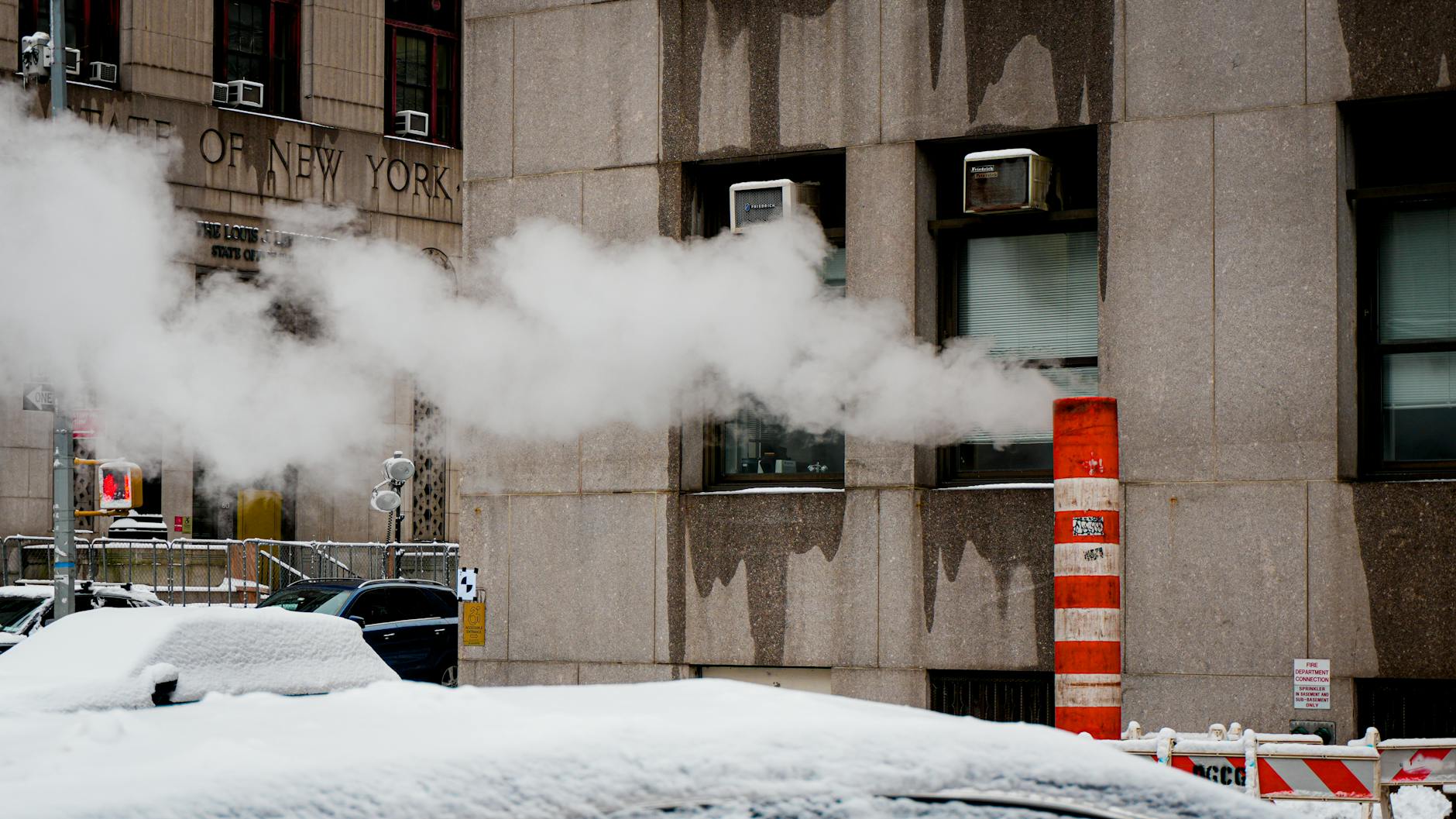
A City Council hearing examining the city’s response to January’s winter storm was postponed Monday when another major snowfall dropped close to 20 inches across the five boroughs, according to city officials.
The oversight hearing, originally scheduled to address accessibility shortcomings during snow removal, was rescheduled for Friday. However, advocates for New Yorkers with disabilities had requested another two-week postponement, citing continued limited access to sidewalks, curb cuts and bus stops that could prevent people with disabilities from attending or testifying in-person.
“We still had problems getting around last week and that was four weeks after the last storm,” said Jean Ryan, a motorized wheelchair user and head of Disabled In Action of Metropolitan New York. “And just the fact that there were 16 to 20 inches of snow in the city after the blizzard means there’s going to be a lot of snowpiles, even if the temperature is a little bit higher.”
Councilmember Shahana Hanif (D-Brooklyn), who chairs the committee on disabilities, called for the hearing after criticizing snow-clearing efforts following the January storm, which left sections of sidewalks off-limits to people with disabilities and created mounds of snow at bus shelters and bus stops.
The January storm brought more than 10 inches of snow to the city, followed by a long stretch of sub-freezing temperatures that made travel treacherous for people with disabilities. Some property owners failed to clear areas near bus stops or create four-feet-wide sidewalk paths that could accommodate wheelchairs and strollers.
“If they do it, it’s exactly the width of the shovel and that’s not wide enough for the wheelchair to go through,” Susan Scheer, who uses a motorized wheelchair, told a news outlet. “They just don’t think about it.”
The city’s first blizzard since 2016 struck from Sunday night into Monday afternoon, extending travel difficulties for New Yorkers with disabilities.
“Since the first snowstorm, I haven’t been able to travel too much,” said Dustin Jones, a wheelchair user who lives in Manhattan. “Then, just when I just started getting comfortable, Mother Nature takes a dump on us all over again.”
The fresh snow prevented Scheer, who has spina bifida, from traveling by bus from her Lower East Side home to a mandatory every-four-weeks infusion treatment on the Upper East Side.
“My husband, who is ambulatory, went out and came back and said, ‘No, it’s not going to happen,’” she said.
After the January storm, Scheer was able to reach her treatment appointment but faced significant obstacles.
“It was bitterly cold and I couldn’t get [the wheelchair] on the sidewalk,” she said. “So I was riding in the street in the very narrow space where the cars were between the snowbanks.”
Scheer, who was instrumental in establishing the MTA’s Access-A-Ride service for people with disabilities more than three decades ago, said she has repeatedly raised concerns about sidewalks and street corner ramps not being cleared of snow or slush.
“I brought up this problem in 1986, ‘87, ‘88 and I’ve brought it up every year since then,” she said. “And it’s like a surprise every year that it snows and that everybody has to think all over again about how they’re going to do this.”
Prior to the recent blizzard, city officials emphasized in briefings and social media posts the responsibility of property owners to clear sidewalks, fire hydrants and unsheltered bus stops, according to advocates.
Ryan credited City Hall for highlighting the four-feet width requirement for sidewalk clearing, noting the specification received more attention before the recent storm than during previous weather events.