
The MTA launched the next round of public engagement for the Interborough Express light rail on April 22, bringing a project that could reshape transit across Brooklyn and Queens into its most visible phase yet.
Six public meetings are scheduled through May, with the first set for Tuesday, April 28, at P.S. 7 in Queens. The sessions give residents a direct line to share concerns and ideas as the agency pushes forward on the largest transit expansion it has undertaken in more than 50 years. Nearly a million New Yorkers live along the proposed route, and the MTA wants them in the room.
The environmental pitch is central to the agency’s current messaging. Because so many potential IBX riders currently depend on private vehicles for travel between Brooklyn and Queens, the MTA projects the light rail would cut roughly 21.8 million vehicle miles traveled each year. That reduction would translate to a measurable drop in annual greenhouse gas emissions, the agency said, though it did not break down the specific tonnage in its announcement.
MTA Chair and CEO Janno Lieber tied the announcement directly to Earth Day. “Nearly one million New Yorkers live along the proposed IBX route, many of whom feel they need a private car for interborough travel,” Lieber said on April 22. “On this Earth Day, we want to make sure these folks know that soon there will be a better, faster and more climate-friendly way to travel between Brooklyn and Queens.”
The transportation sector’s footprint backs up the urgency. According to the U.S. Environmental Protection Agency, transportation accounted for 28% of all national greenhouse gas emissions in 2022, making it the country’s single largest source. The MTA said more than half of that sector’s emissions come from passenger cars and trucks specifically, the exact category the IBX is designed to pull riders away from.
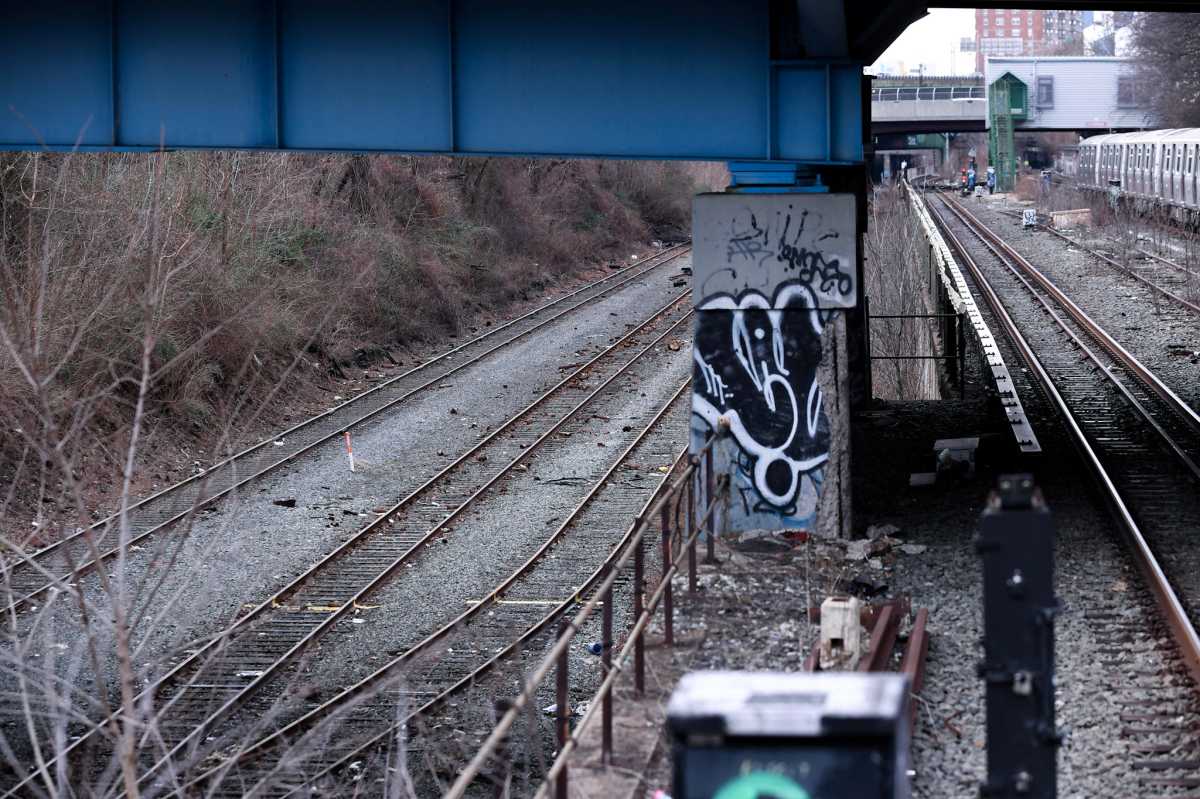
Not everyone in the two boroughs is ready to cheer. amNewYork reported that residents at the street level are raising pointed questions about what construction along the freight corridor could cost in trees and green space.
Tree loss. That’s the concern cutting through multiple community voices right now.
Liisa Lunden of Elmhurst argued the project risks significant ecological damage. “IBX would destroy thousands of trees along and near the freight line,” Lunden said. “A single tree in NYC can support hundreds to thousands of species, including birds, mammals, insects, etc. and trees play a crucial role in supporting this biodiversity. What happens to all of this wildlife?”
Christina Wilkinson, secretary of the Juniper Park Civic Association in Queens, echoed that anxiety with a specific point about function. “The trees currently serve as a buffer between the polluting freight trains and the community,” Wilkinson said.
A Queens resident identified as Will told reporters he supports the IBX concept but shares the worry about what disappears during construction.
The tension is real. Supporters see a light-rail line that could finally give outer-borough commuters a faster, cleaner alternative to sitting in traffic on the Brooklyn-Queens Expressway or cobbling together bus and subway trips. Critics want guarantees that the environmental gains at the regional scale don’t come at the cost of the local tree canopy that communities in Elmhurst, Middle Village, and other neighborhoods along the corridor have relied on for decades.
Lieber acknowledged that continued community input is essential to moving the project forward responsibly. “The upcoming public workshops are an important step in reaching them as we continue to advance the IBX,” he said.
The MTA’s IBX project page outlines the full proposed alignment connecting the two boroughs, and residents can review preliminary maps before the April 28 session at P.S. 7. Five additional meetings are spread across Brooklyn and Queens through the end of May, giving communities at different points along the corridor their own chances to weigh in. The agency hasn’t released a construction start date, but the pace of environmental review and public outreach suggests the project is moving through planning stages with real momentum, not just as a concept on a slide deck.
For riders who’ve spent years watching subway lines skip their neighborhoods entirely, the IBX represents something the outer boroughs don’t get often. A direct shot. The public meetings starting this week will show whether the MTA can bring skeptical communities along for that ride.