
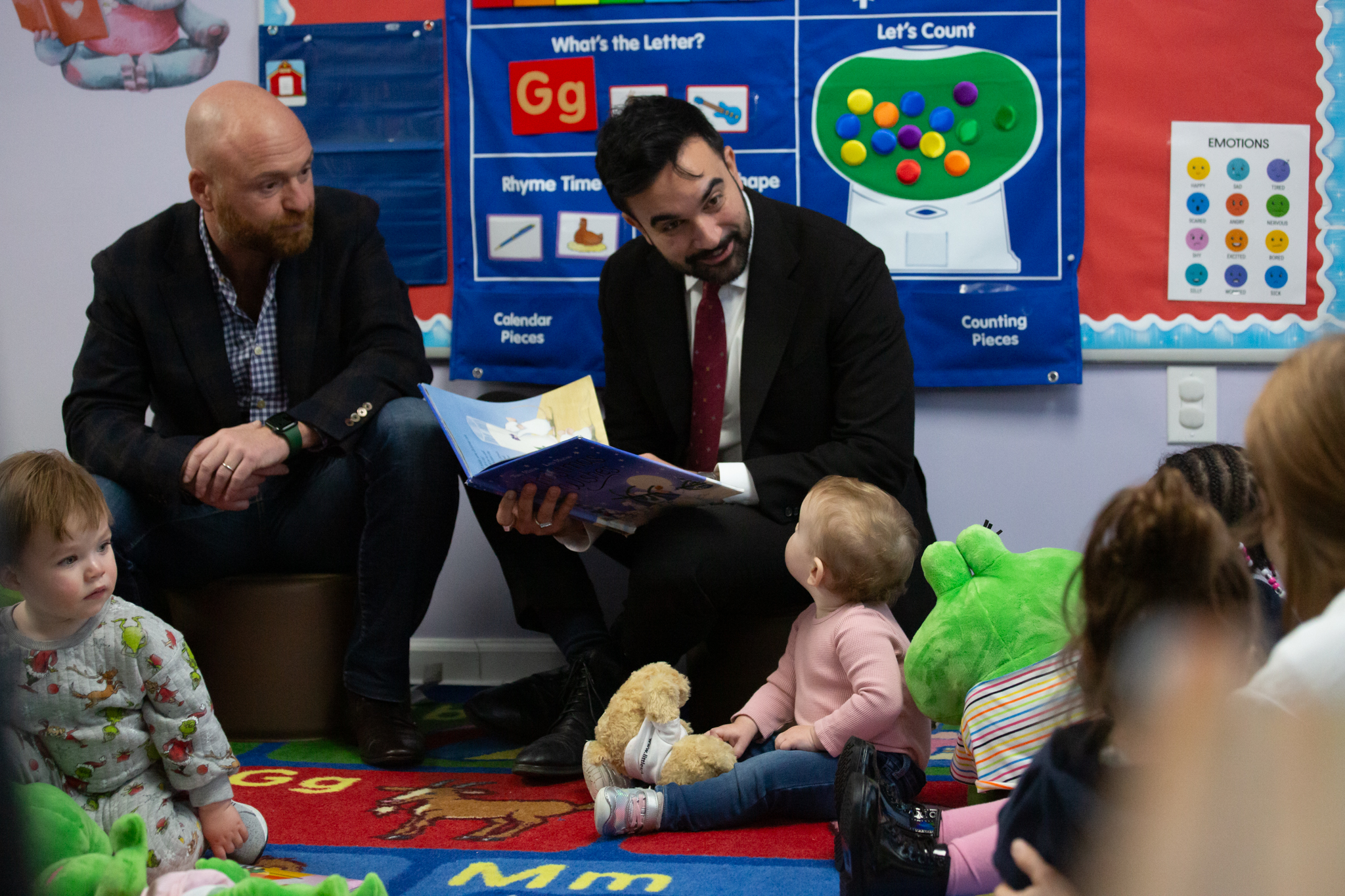
The New York City Council pressed health officials Wednesday over a persistent backlog in child care background checks, as the city races to open 2,000 free seats for 2-year-olds by September.
City Council Health Committee Chair Lynn Schulman told the oversight hearing that delays in the process threaten Mayor Zohran Mamdani’s push to expand access across all five boroughs. “If our city’s goal is universal child care, then we must ensure that the administration of that care, including the background check process, is as streamlined as possible, and that new facilities and employees don’t get held up in red tape,” Schulman said.
The Department of Health and Mental Hygiene has struggled to process background checks since federal requirements were updated in 2019, Schulman said. Some checks have taken up to a year to clear. With the city now issuing contracts to private child care providers who will receive city funding to staff the initial 2,000 seats, that bottleneck isn’t just a bureaucratic nuisance. It’s a direct threat to a September launch date that parents and providers are counting on.
Two bills landed on the table Wednesday, each aimed at a different piece of the problem.
Council Majority Leader Shaun Abreu introduced the first, which would end the health department’s requirement to run a new background check on a prospective child care provider, employee, or volunteer who already passed one within the past five years and has worked continuously at a licensed child care facility for more than 180 days. The logic is straightforward: don’t re-screen someone the system already cleared and who hasn’t left the industry.
Council Member Tiffany Cabán introduced the second bill. It would require the health department to notify parents and other stakeholders faster when a child care center closes because of a health hazard, and it would require the department to post a summary of child care inspection reports within 24 hours of an inspection. Right now, those reports go up on the health department’s website, but the timing is inconsistent enough that parents can’t always get current information when they need it.
The city is rolling the child care expansion out across five school districts, touching neighborhoods in Manhattan, Queens, Brooklyn, and the Bronx. Mamdani has made universal child care a signature priority, and the 2,000-seat program for 2-year-olds this fall is the first step. Providers applying for licenses must pass extensive background checks required by law before they can open. After a facility starts operating, the health department conducts unannounced inspections to check compliance with health and safety mandates.
Those inspections don’t draw much public attention.
The permitting and inspection work is among the health department’s least visible duties. Most New Yorkers think of DOHMH in terms of restaurant grades or disease surveillance. But child care licensing sits squarely in the department’s portfolio, and the backlog documented in the reporting by The City on this hearing shows how consequential that quiet work has become now that city hall is banking on it to scale a major social program.
Schulman didn’t spare the department in her assessment. “We must also ensure the relevant city agencies have the necessary bandwidth to complete these background checks and screenings in a timely manner,” she said. “Unfortunately, it appears that DOHMH has struggled to keep up since the implementation of these comprehensive background checks.”
The federal background check standards updated in 2019 are more comprehensive than what states and cities previously required, covering a wider set of databases and check categories. New York City’s compliance with those standards added volume and complexity to a process the health department was already running with limited staff.
Abreu’s bill targets that volume problem directly by removing redundant checks for workers who have stayed continuously in licensed child care settings. Cabán’s bill targets the transparency gap that leaves parents without timely information when something goes wrong. The two proposals don’t conflict. If both move through committee, the Council could pass them together and send a package to Mamdani’s desk before the September rollout.
Whether the administration supports either bill, or whether DOHMH would need additional staffing resources to meet the 24-hour inspection reporting requirement in Cabán’s proposal, was not immediately clear from Wednesday’s hearing record. What is clear is that the Council isn’t willing to let the background check backlog quietly derail a program city hall has made central to its first-year agenda, and providers waiting on clearance have the Council’s attention as the September deadline approaches.