
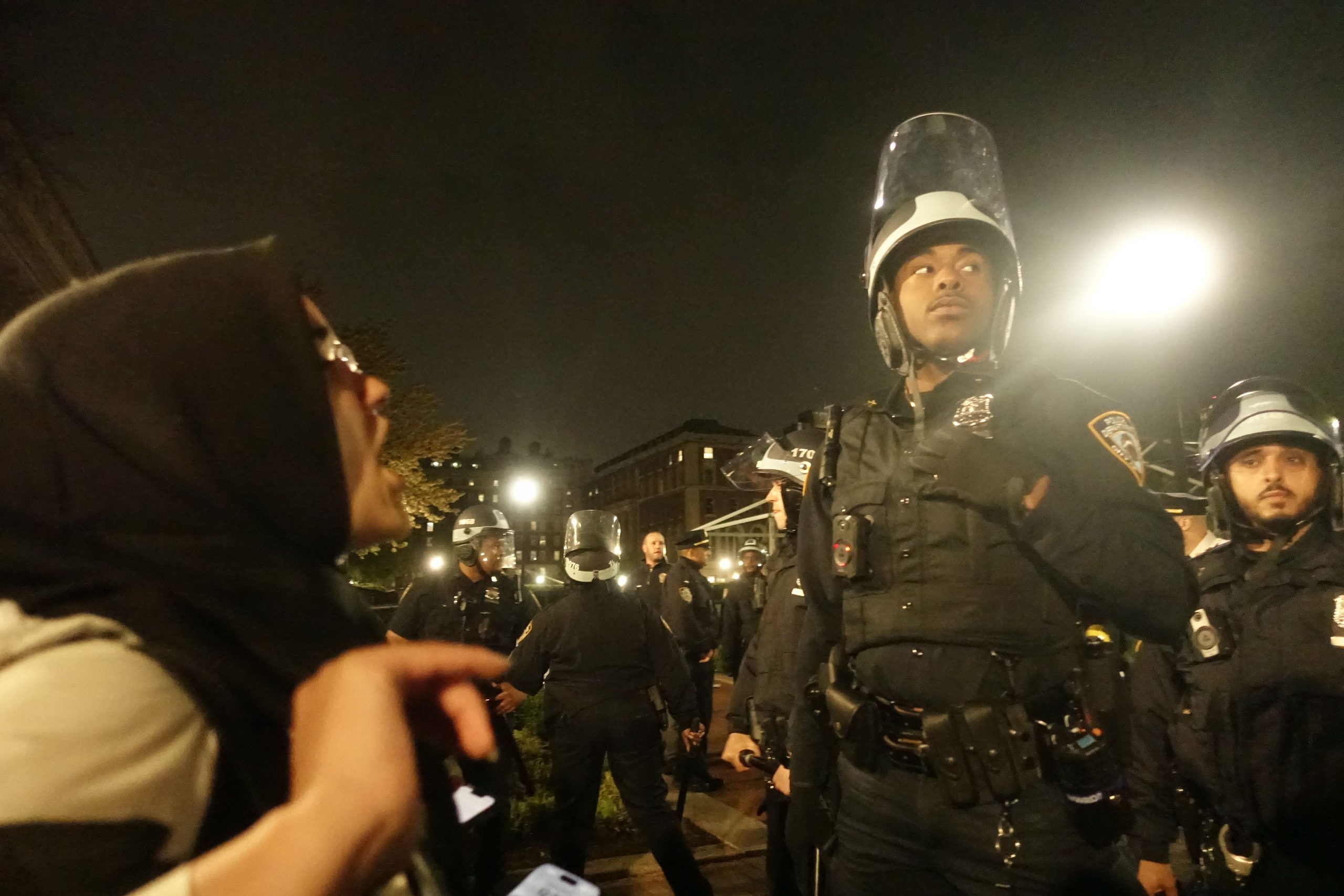
Mayor Zohran Mamdani has until Saturday to decide the fate of a bill that would establish protest buffer zones around New York City schools, and his own labor allies are pressing hard for a veto.
A representative of Deputy Mayor for Economic Justice Julie Su met via video call last week with leaders of more than a half-dozen unions and the New York City Central Labor Council, according to multiple sources who attended or were briefed on the meeting. Su’s representative gave no signal about which way Mamdani would go.
City Hall press secretary Joe Calvello put out a statement Thursday that stopped well short of a commitment. “Mayor Mamdani is aware of the concerns raised regarding the potential for 175-B to limit the constitutional and labor rights of New Yorkers,” Calvello said, referring to the bill’s formal designation. “The Mayor will weigh these concerns seriously as he makes a final decision on this legislation.”
That’s not a veto. It’s not a signature either.
The City Council passed two buffer-zone bills on March 26, targeting hate crimes across the city. One affects houses of worship. The other covers schools and educational facilities, and it’s the one that’s generating the real fight. Both bills require the NYPD to create security perimeters around protests, directing the department to set the specific distances that would separate demonstrators from buildings.
The religious sites bill sailed through at 44 to 5, a veto-proof margin that leaves Mamdani with no practical recourse. The schools bill is a different story. It passed 30 to 19, a margin the mayor can realistically override.
Two unions are driving the opposition. United Auto Workers Region 9A and Professional Staff Congress/CUNY, which together represent large numbers of college and university teaching staff, argue that the buffer-zone bill would restrict their members’ rights to strike or demonstrate at their own workplaces. Last week, those unions joined other labor and community groups in sending a letter urging Mamdani to veto the legislation, calling it a “radical overreach” that limits free speech and endangers New Yorkers, as The City reported.
The pressure campaign reflects real political stakes for a mayor who built his coalition largely on labor and progressive support. Vetoing a bill that passed City Council isn’t a move any mayor takes lightly, and Mamdani’s team has been careful not to tip its hand.
Spokesperson Dora Pekec said Wednesday there was no update on what the mayor intended to do.
Council Speaker Julie Menin has been a public champion of both bills, which were framed as anti-hate-crime measures. Her office has not backed down from that position. The speaker represents a Manhattan district and pushed the legislation hard through a council where the schools bill still attracted 19 no votes, a significant bloc of dissent for a measure sold primarily as a response to rising antisemitism and anti-Muslim bias in and around school buildings.
Free speech advocates held protests at City Hall as far back as February 25, when both bills were still working through the legislative process. Their objections then are now being amplified by organized labor, which carries considerably more weight in Mamdani’s political world.
Under the city charter, Mamdani’s Saturday deadline is firm. If he neither signs nor vetoes the schools bill by then, it automatically becomes law. That’s a path available to him, one that lets him avoid a direct confrontation with Menin and the council majority while also not formally endorsing a bill his labor allies despise. Whether he takes that route, issues a veto, or signs it outright is the question his administration isn’t answering yet.
The broader context here matters. Mamdani won the mayoralty with deep support from public-sector workers and progressive unions. United Auto Workers Region 9A and Professional Staff Congress/CUNY aren’t fringe players. They represent the kind of organized constituencies that knock on doors and turn out voters. Their argument, that a buffer-zone law could be used against striking workers at universities and schools, cuts directly at labor’s core concern about the reach of any law that gives police discretion over protest geography.
City Hall’s engagement last week, routing the conversation through Su’s office rather than the mayor’s own political team, suggests an administration managing a difficult decision with deliberate care.
Saturday is the deadline.