
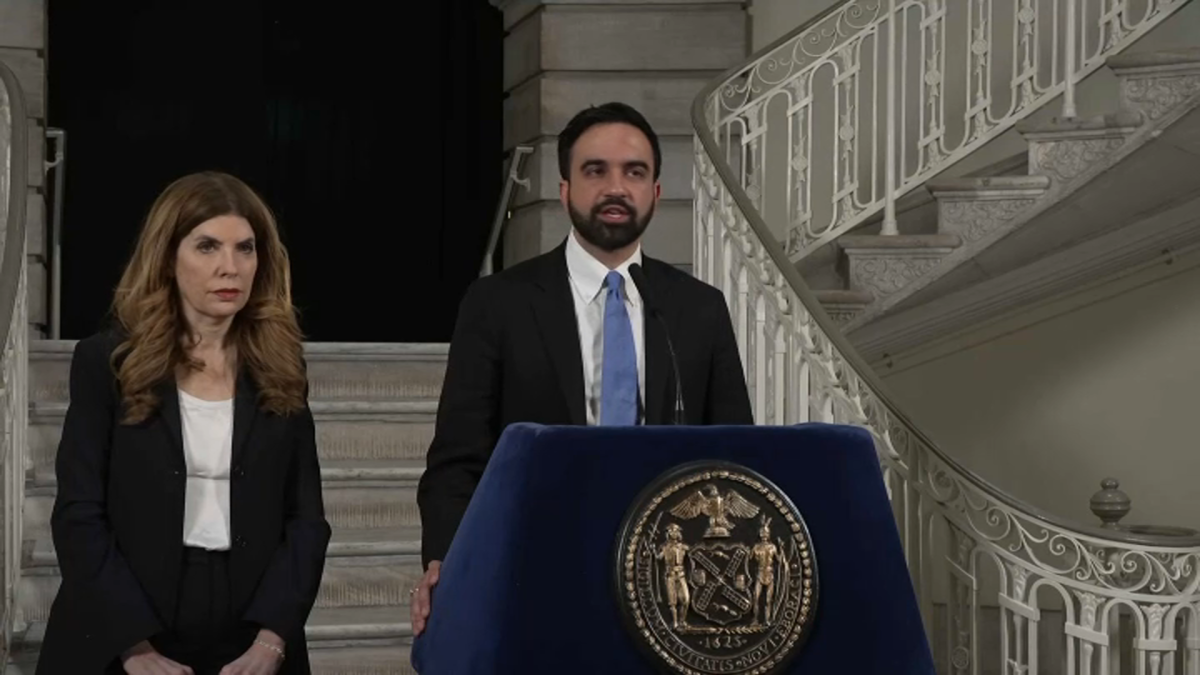
Mayor Zohran Mamdani called New York City’s budget shortfall a “crisis of historic magnitude” Tuesday, joining Council Speaker Julie Menin at City Hall to push Albany for at least $1 billion in new aid.
The two officials appeared together in the City Hall rotunda and announced a coordinated lobbying effort targeting the State budget, which is already past its April deadline. Mamdani voiced support for extending the State’s final budget deadline from this Friday to June 12, arguing that a fiscal hole of this size can’t be patched without action from the Legislature and governor.
“New York City faces a budget crisis of historic magnitude,” Mamdani said during the joint press conference. “We’ve inherited a deficit larger than any since the Great Recession. Years of mismanagement and chronic under budgeting, alongside a structural imbalance between what New York City sends to the State and what we receive in return, have taken a toll.”
The number driving all of it: $12 billion. That’s the gap Mamdani says the city must close to meet its legal obligation to pass a balanced budget, and he’s been clear that savings cuts alone won’t get it done.
The mayor and Menin are pushing hard on one specific revenue mechanism. The city wants Albany to reduce the Passthrough Entity Tax credit, known as the PTET, from its current 100% rebate level down to 75%. The PTET lets businesses sidestep the 2017 Tax Cuts and Jobs Act’s cap on state and local tax deductions from federal income taxes by paying a New York City business tax that currently gets returned in full to business owners. Mamdani and Menin argue that trimming that rebate to 75% would generate nearly $1 billion in additional revenue for the city.
“Today the Passthrough Entity Tax Credit serves as a tax cut for the rich,” Mamdani said. “A reduction would ensure the wealthiest pay their fair share.”
Mamdani has blamed his predecessor directly for the depth of the fiscal hole. Former Mayor Eric Adams, he’s charged, “poisoned” the budget books by chronically underestimating billions in recurring expenses. Adams hit back, saying, “Free is a lie,” and insisted earlier this year that he left the city with $8 billion in reserves.
The back-and-forth between the two mayors has grown sharp.
That’s the politics.
The math is what’s driving the emergency. NBC New York has reported that Mamdani told reporters he doesn’t plan to scale back his campaign promises despite the deficit, which would require billions in spending beyond the $12 billion needed just to balance the books.
“We will not allow the failures of the prior administration to dull the ambitions of our own,” Mamdani said in January.
That position puts the mayor in a tough spot. He’s asking Albany for structural relief while simultaneously pledging to pursue an agenda that costs significantly more than what the city currently brings in. Albany’s own budget negotiations are already stalled, and lawmakers don’t face pressure to give City Hall everything it’s asking for.
The New York City Council is playing a central role in building the case for State action. Menin’s involvement gives the lobbying push broader institutional weight than if the mayor were acting alone. Together, they’re pushing the State to increase its overall budget earmarked for city services alongside the PTET credit change.
For working-class New Yorkers, the stakes here are concrete. If the city can’t close the gap through new revenue or State aid, the alternative is cuts to services. That means libraries. Sanitation. School programs. The kind of budget pressure that historically falls hardest on neighborhoods in Brooklyn, the Bronx, and upper Manhattan.
Mamdani said Tuesday that “the only way to meet our legal obligation to pass a balanced budget” without placing financial pressure “into the backs of working people” is through new revenue streams and a reset in the city’s fiscal relationship with Albany.
The State’s budget deadline, originally set for April 1 under the State Constitution, has already slipped. Mamdani’s support for pushing the new deadline to June 12 is a calculated bet that more negotiating time gives city advocates a better shot at extracting concessions from a Legislature that’s balancing its own competing demands.
Whether Albany moves fast enough to give the city what it needs before the city’s own budget deadline arrives is a question that will dominate the next six weeks at City Hall.